When InCity Meets Quanzhou Urban Development: How Shizhou City Reshapes the Urban Consumer Ecosystem with ‘Non-Standard’ Strategies
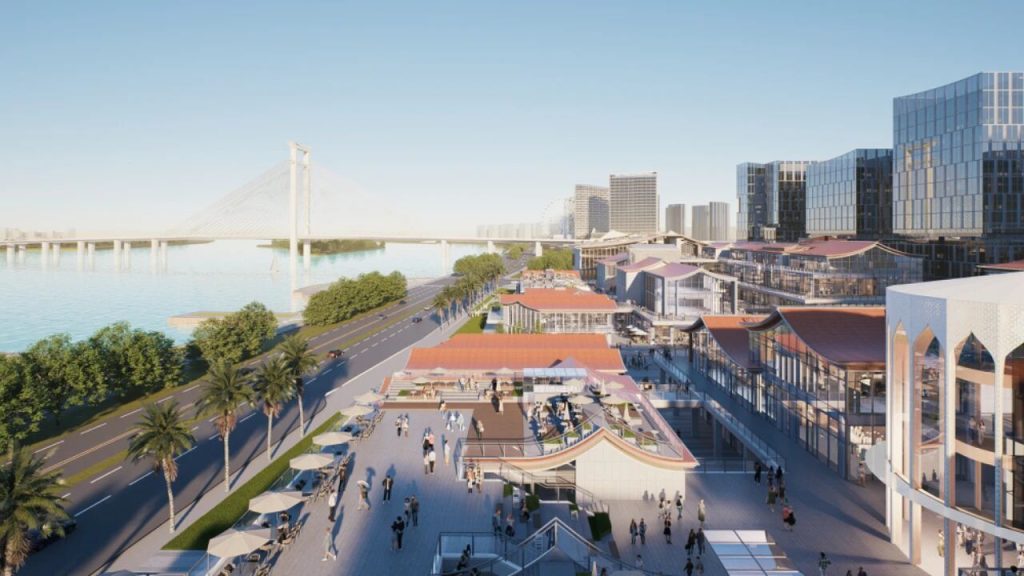
In the current stage of deep urban renewal and the commercial real estate sector seeking differentiated breakthroughs, “non-standard retail” has become a significant industry trend. However, its challenges—being highly praised but often failing to attract foot traffic, long cultivation cycles, and difficulty in converting visitors into customers—are equally pronounced. The “Quanzhou · Shizhou City” project, a collaboration between InCity Group and Quanzhou Urban Development Group along Quanzhou Bay, aims to address these industry-wide challenges by combining preemptive operations with government-enterprise coordination, deeply integrating local cultural DNA with commercial operation logic.This project is not only a “new species” in Quanzhou’s coastal commercial landscape but also represents a joint effort by a professional operator and a local state-owned enterprise to explore how non-standard retail can thrive within the land in the second half of urban renewal.Deconstructing the “Non-Standard” DNA: From “World Heritage + Coastal” to “Living Laboratory”.Situated on the historic millennial commercial port at the mouth of Quanzhou Bay, the “Quanzhou · Shizhou City” commercial complex is rising rapidly. Covering a total of 200 acres with a commercial area of 200,000 square meters, it is positioned as “Fujian’s first coastal non-standard commercial district,” slated to open in September 2026.
As the flagship pilot project within the 1.5 million square meters of the East Sea Central Vitality Zone developed by Quanzhou Urban Development Group, its 200,000-square-meter commercial scale is more than just size—it represents a systematic exploration of how local authenticity and international appeal can coexist. By leveraging spatial design, tenant mix, and content, the project aims to create a “living lab” for urban life: outwardly engaging with the world, yet deeply rooted locally.Spatial Design: Contemporary Translation of Minnan Architectural Aesthetics.Shizhou City uses architecture as a narrative link, translating Quanzhou’s maritime DNA and Minnan traditional textures into unique commercial spatial memories. Traditional elements such as Minnan red bricks, arcades, and intricate masonry are blended with modern minimalist design. Its “tiered setback” approach preserves panoramic views of Quanzhou Bay, resonates with St. Tong Port’s maritime culture, and provides versatile storefront facades.The circulation system, structured around streets, alleys, courtyards, plazas, and platforms, recreates the “serendipitous wandering” experience of Quanzhou’s old town, allowing visitors to naturally engage with local spatial culture while enhancing the commercial experience.Tenant Mix and Brand Strategy: International Perspective Meets Local Depth.Shizhou City aims to build tension between “international and local” in its tenant mix.
Through a “dual-center plus multi-cluster” layout, cultural content is commercially converted while commercial vitality enriches local culture.A “Quanzhou Culinary Culture International Exchange Center” transforms the city’s global gastronomic reputation into an experiential window, combining local street flavors with global cuisine.The project is organized into six thematic clusters: Riverside Leisure, Urban Flagship, St. Tong Lifestyle, Shizhou Experience, Urban Trend, and Fujian Heritage, creating three core scenarios: “International Coastal Leisure,” “Trendy Urban Living,” and “Revitalizing Local Culture.”High-quality brands have already been signed or secured for prime locations, including Shanghai’s “Echo Place,” Fuzhou’s popular “Huaji Grocery,” local favorites like “Xiaohonghua Livehome,” the century-old “Yuanfang,” and Michelin Bib Gourmand-recommended “Zhongji Salt Roasted Duck.” The brand matrix continues to expand.Original Content: A Continuously Growing Cultural Ecosystem.The soul of non-standard retail lies in content. Reviewing activities from 2025 onwards, Shizhou City has created a multidimensional content ecosystem through IP and community building:Proprietary Cultural IP: The annual “Fujian Heritage Collection” merges non-standard retail with local culture through markets, creating a closed-loop ecosystem of “traffic attraction – cultural accumulation – brand incubation.”
The first market brought together over 70 top-quality brands across technology, lifestyle, retail, and dining, attracting over 100,000 visitors and generating foot traffic 1.5 times higher than Quanzhou’s core weekend averages.Shizhou Performance Center: In collaboration with Shanghai’s “Echo Place,” it features Fujian’s largest Live House, comedy theater, vertical-system bars, and multifunctional social spaces, becoming a magnet for youth culture.Community Ecosystem: Initiatives like the “2025 Fujian Non-Standard Retail Conference,” the Quanzhou Coastal Romantic Line Business District Alliance, and the “Shizhou Creation” brand co-creation program connect over 300 pioneering brands, linking waterfront business zones to foster a year-round entertainment and cultural network.In essence, Shizhou City’s core logic is: let culture be the engine of commercial uniqueness and let commerce become the sustainable vessel of culture.Phased Commercial Rollout.The 200,000-square-meter commercial component will open in phases: Phase 1 Street District (September 2026), Phase 2 Community Mall (2027), Phase 3 Sports Mall (2028), Phase 4 Podium Retail (2028), and Phase 5 Park Mall (2029). This “commerce-first, infrastructure-follow” approach establishes market awareness early while unlocking continued value through tenant mix upgrades.Crucially, as the commercial engine of Quanzhou Urban Development’s 1.5 million-square-meter Butterfly Bay Business Center, it forms a “15-minute living circle” with nearby high-end residences, 5A office towers, and the international convention center.
The combination of municipal resources, cultural-tourism IP, and transport hubs elevates it beyond a conventional retail project, becoming a key node linking Quanzhou’s ancient city heritage with coastal economic development.InCity’s “Quanzhou Solution”: Anchoring Value Early.Shizhou City’s “non-standard” approach is embedded in Quanzhou’s urban fabric from inception. InCity’s preemptive operations, initiated 18 months before opening, transform the cultivation period into a “value accumulation phase” by securing resources, activating traffic, and building communities—solving the typical “cold launch” problem of non-standard retail and ensuring a “hot opening.”This preemptive operational system spans culture, brand acquisition, traffic, community, and content:Cultural Preheating: Since 2025, multiple original events including brand salons, markets, and forums have pre-established cultural resonance and cultivated early user engagement.Brand Acquisition: Cultural resources are leveraged as a competitive advantage to secure international and local brands, preventing empty stores or culture-commerce misalignment.Risk Mitigation: Preemptive operations reduce cultivation risk; for instance, the Fuzhou Yantai Mountain project achieved 95% occupancy at opening, validating the model nationally.From Fuzhou Yantai Mountain to Shizhou City, InCity has developed replicable capabilities: localized reconstruction, curated content, and ecosystem community management.
This strategy converts the “high-risk” nature of non-standard retail into “high certainty,” establishing a proprietary methodology.Government-Enterprise Collaboration: Local Roots with Professional Operations.The project’s confidence comes from the strong alliance between Quanzhou Urban Development Group and InCity Group. The local SOE provides financial strength and credibility, while InCity contributes professional national-level operational expertise. Together, they ensure long-term stability and offer a replicable model for non-standard retail in Quanzhou and Fujian.Through spatial empowerment, symbiotic tenant mix, continuous operations, and collaborative guarantees, Shizhou City transforms culture into a commercial moat and commerce into a cultural amplifier. Its value extends beyond creating a commercial landmark—it offers the industry a new paradigm for non-standard retail development: proactively creating value through preemptive operations and deepening local roots via government-enterprise collaboration.While only time will reveal if this model can sustain long-term market success and scale across regions, Shizhou City already serves as a vivid, instructive example of commercial innovation in the second phase of urban renewal.