What Is “Urban Public-Oriented Commerce,” and Why Has It Become the New High-Level Winner?
Meanwhile, the consumption side has undergone a structural shift. People’s expectations for commercial spaces have long surpassed mere “shopping,” moving toward complex lifestyle scenarios that integrate cultural experiences, emotional well-being, social interaction, and public engagement. This implies that those who can form a deep synergy with urban public resources gain a higher level of competitiveness. This is the logical starting point for the rise of urban public-oriented commerce.It is not simply a matter of overlaying commercial and urban functions. Instead, it adopts systematic thinking to integrate parks, cultural venues, industrial heritage sites, waterfront spaces, sports facilities, and other urban public resources, restructuring commercial spatial logic, content ecosystems, and traffic mechanisms. This allows it to create hard-to-replicate high-dimensional advantages in fierce competition. Commercial rivalry is no longer just a contest of “sales per square meter” but a battle over the integration of urban resources.Urban Public-Oriented Commerce: High-Dimensional Competitor Reshaping Urban Space Value.Functional Integration: From “Consumption Container” to “Urban Micro-System”.The most prominent feature of urban public-oriented commerce is functional integration. It is not merely the sum of commerce + leisure + culture, but the creation of a “micro-system of urban functions” through systemic thinking.
In traditional models, citizens’ urban activities are fragmented: shopping in malls, leisure in parks, culture in theaters, socializing in cafés. In public-oriented commerce, these functions are organically reorganized into a continuous spatial experience network.For example, New York’s Hudson Yards is designed not simply as a “commercial + landmark overlay” but aims for a multi-dimensional urban experience, integrating the Vessel observation tower, The Shed arts center, the High Line, and green plazas, creating a “three-dimensional theater-like” spatial topology. Commerce, culture, landscape, and public space form a mutually supportive ecological loop.Shanghai EKA·Tianwu, serviced by RET, leverages industrial heritage renewal and regional cultural regeneration, effectively combining historical factory structures, contemporary art curation, community public activities, and commercial consumption scenarios. The project retains the framework and industrial symbols of the former Shanghai shipyard while embedding art galleries, designer brands, creative offices, and open courtyards, enabling history, culture, and daily life to coexist and thrive. It is no longer merely a consumption space but a “new urban living room” carrying city memory, activating community vitality, and promoting diverse interactions.Deep Matching: From “Physical Consumption” to “Emotional Well-Being”.
The second key aspect of urban public-oriented commerce is emotional and cultural alignment. Traditional commerce follows a rational supply-demand logic, whereas urban public-oriented commerce functions as psychological infrastructure, addressing urban residents’ “sub-health, anxiety, and loneliness”—a spatial expression of soft needs.Design is no longer limited to traditional consumption pathways but focuses on psychological flow: from creating a sense of relaxation at the entrance, to emotional buffering nodes along circulation paths, to emotionally resonant resting spaces, crafting an urban oasis that allows people to let their guard down, experience healing, and stimulate empathy.A typical example is Grand Green Osaka in Japan. It integrates commerce with Meiji North Park’s lawns, waterfront areas, and footbaths, constructing a green therapeutic ecosystem. Here, commerce is no longer a closed container but an open system permeated by nature. Through events, performances, markets, and art exhibitions, the space assumes a role of urban mental restoration.Traffic Upgrade: From “Site-Level Flow” to “City-Level Flow Coordination”.The core of public-oriented commerce is not merely “built next to urban resources” but “making urban resources part of commercial logic.”
True traffic coordination stems from mutually supportive spatial logic.Stadiums, museums, and theaters naturally attract high-density, strongly branded visitors, but their traffic is often episodic and difficult to retain. Urban public-oriented commerce converts this transient public flow into sustainable commercial momentum through spatial linkage, business synergy, and curated activities.London’s Westfield Stratford City exemplifies this symbiosis with the Olympic Stadium. By designing walking paths, event-linked activities, and themed consumption scenarios, event-based traffic is converted into continuous footfall, increasing game-day traffic by over 50% and transaction value by more than 20%—a scientific outcome of spatial organization and behavioral guidance.Three Paths to Build High-Level Resource-Oriented Commerce.Deeply Leverage Urban Resources to Create Symbiotic Ecosystems.“Resources” in urban public-oriented commerce extend beyond natural or cultural heritage to include time, memory, and social behavior patterns in city life. Activating urban resources is not simply “renovation” but reinterpretation. Developers must allow a space’s past, present, and future to coexist, often finding breakthroughs in non-obvious resources.Take London’s Battersea Power Station: it is not merely a site update but transforms industrial heritage into urban cultural narrative.Boiler rooms become luxury retail, turbine halls house Apple HQ, and chimneys contain observation elevators. History is spatially preserved, creating a unique cultural memory hub.
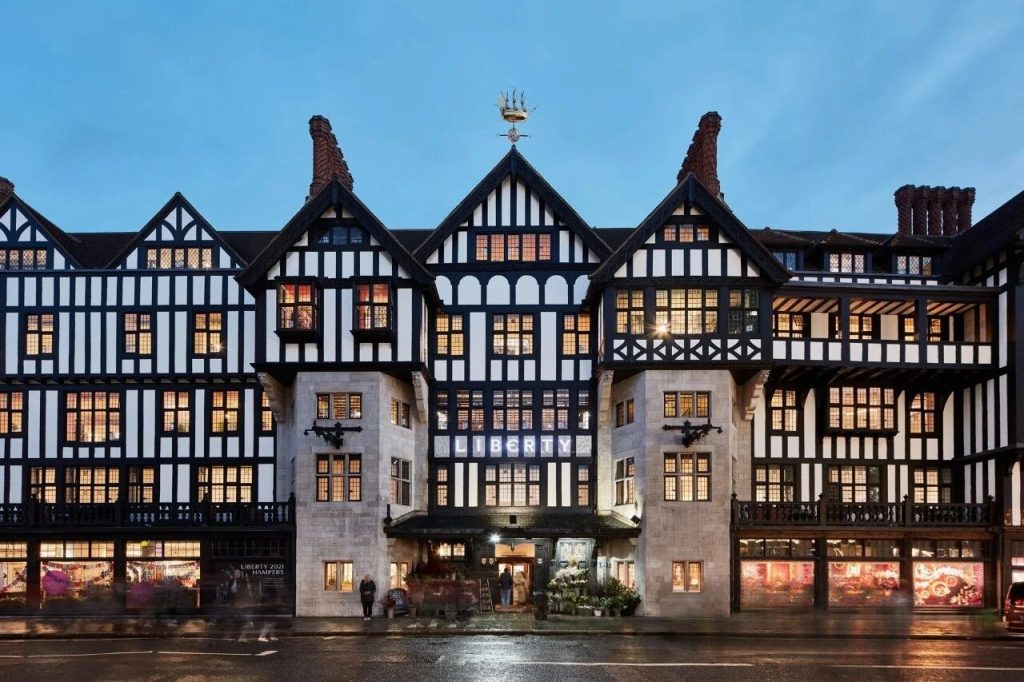
This is a classic paradigm of urban reproduction—reviving culture through space, then activating commercial value through cultural regeneration.Create “Unique Resources” to Build Sustainable Attraction.When urban resources are limited, resource recreation is another path. Through content innovation and spatial curation, commercial projects can generate their own resources, including:Thematic IP strategies: Nintendo zones, Louis Vuitton experiential areas, Sphere emotion-based IPs—creating new resources via emotional symbolism.Spatial experience innovation: pocket parks, wedding show venues, curated spaces—turning commerce into a “theater of urban life.”Public art and large-scale installations: using visual impact to form urban symbols and amplify social virality.Whoever creates memorable spaces wins city attention. Future competition will rely less on geographic location and more on “content geography”, making commercial spaces producers of urban memory.Operate with “Culture–Emotion–Community” Ecosystem to Maintain Sustainable Traffic.The ultimate goal of commerce is not transactions but rebuilding urban social connections. With a three-pronged approach—culture, emotion, and community—the focus shifts from acquiring new visitors to retaining them.Urban public-oriented commerce constructs a “people-space-culture” loop, as seen in successful projects like Shanghai Shangsheng Xinsuo, Taipei Eslite Life, and London Liberty, creating spaces where consumers find identity reflection: relaxation, poetry, healing, social interaction, and creativity.RET Group’s collaboration on Hangzhou Yuniaoji further expands this identification into a city-level community, forming a continuous cultural and social network.