Say Goodbye to Blind Expansion! The Growth Logic of the Restaurant Industry Has Changed in 2025
Market Overview and Structural Adjustment.In 2025, China’s restaurant market demonstrated remarkable resilience amid steady expansion. As chain penetration is projected to reach 25% and the daily peak of food delivery orders surpasses 200 million, the industry has officially entered a stage of structured, sustainable growth. Rather than focusing solely on scale expansion, the industry is now undergoing deep iteration centered on efficiency improvement, category optimization, and capital empowerment. Leading brands are accelerating store openings leveraging their scale advantages, while niche segments such as freshly made beverages and authentic Chinese dining are standing out with differentiated competitiveness. Meanwhile, the food delivery market is transitioning from “volume acquisition” to “quality and efficiency enhancement,” with platforms and merchants collaboratively innovating business formats and optimizing services to meet consumers’ dual demands for convenience and quality.Notably, the capitalization of the industry is accelerating, with several leading brands pursuing IPOs to inject vitality into the market. At the same time, lower-tier cities and central-western regions, driven by enormous consumer potential, have emerged as new growth poles for store expansion.
Consequently, a critical question for 2025 is how benchmark brands across various sub-sectors accurately capture consumer needs, adapt to shopping center operational logic, and identify growth opportunities within structured market adjustments.Fast-Casual Noodles and Quick Meals.In the fast-casual noodles and quick meals segment, which serves high-frequency daily dining needs, competition has long moved beyond simple taste differentiation. It has evolved into a systematic game of efficiency adaptation and scenario coverage. From a consumer perspective, the core demand is achieving a balance of “quick and quality” dining in a fast-paced lifestyle—satisfying immediate meal efficiency without compromising taste or health. From a commercial ecosystem standpoint, these brands form the foundation of shopping center dining, filling gaps in the fast-casual segment with high table turnover and providing services across all time slots. Through the dual linkage of consumer demand response and commercial value feedback, they act as a crucial bridge connecting everyday dining habits with the vibrancy of commercial spaces.Case Studies:Yu Jian Xiao Mian (Guangzhou, 2014): Entered the market with Sichuan-Chongqing flavors using a “all-audience, all-time, all-scenario” strategy—47 24-hour stores plus 15-minute grab-and-go meals covering commercial and residential areas.
Under a direct-operated + franchise model, 231 direct stores contributed 82% of total revenue, while franchise stores in lower-tier markets maintained a 92% survival rate. Its 2025 push to become the “first publicly listed Chinese noodle brand” underscores its benchmark status.Wang Fanxing Noodle House (Nanjing): Leveraging craft quality at mass-market pricing, this brand now covers over 30 provinces, generating annual revenue exceeding 1 billion RMB, making it a top choice for young professionals and families.Rou Rou Da Mi (Japanese-style fast meals): After the successful 2022 Shanghai flagship, it employs a chef-counter preparation model (transparent cooking + streamlined menu), achieving over 20 table turnovers at peak hours. A 100-square-meter store generates over 1 million RMB monthly, and TikTok views exceeding 43 million strengthen its premium fast-casual positioning, targeting urban consumers seeking high-quality, cost-effective meals.Uncle Pu Bibimbap: With an affordable price point of 22–28 RMB, its signature beef stone pot bibimbap has sold 17 million portions nationwide. Paired with free rice refills, the brand operates over 1,000 stores, leading the southern market. Its low-investment, high-empowerment model makes it a safe choice for shopping centers filling essential dining gaps.Shi Li Dao (Healthy Chinese Cuisine): Breaking the limitations of traditional light meals, Shi Li Dao integrates over 20 medicinal and edible ingredients into its Chinese-style controlled-calorie meals.
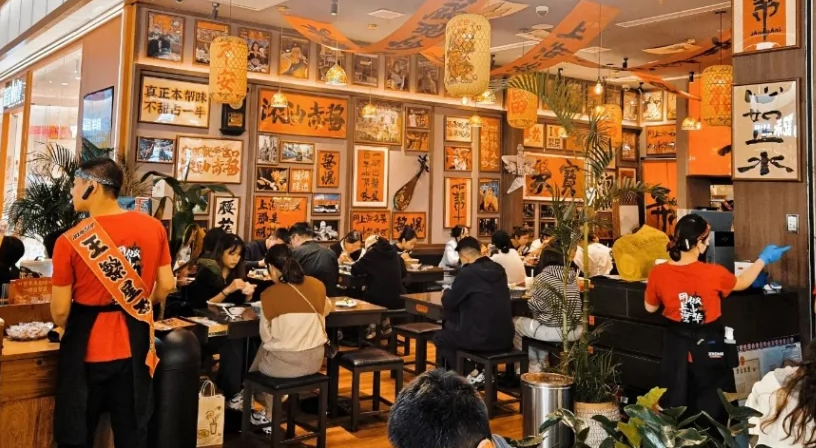
A 25-square-meter kiosk averages 410 daily orders and generates a monthly net profit of 49,000 RMB. Serving community wellness and shopping center light dining areas, it demonstrates the market potential of healthy fast-casual dining across more than 20 cities in over 10 provinces.Barbecue and Hot Pot Segment.While fast-casual noodles target daily efficiency needs, barbecue and hot pot brands cater to the emotional and social consumption segment. Competition in this space is no longer just about taste; it centers on flavor uniqueness and experience design.Flavor: Regional authenticity (e.g., Sichuan-Chongqing spicy grilled fish, Korean-style barbecue techniques) turns taste into a social conversation starter.Experience: Themed interiors and interactive dining (transparent grills, lively atmospheres) transform a meal into a social gathering or family bonding experience.For shopping centers, these brands act as engines for nighttime economy and weekend foot traffic, with high table turnover meeting concentrated customer flow, and high ticket values unlocking spending potential. This creates a virtuous cycle between fulfilling social-emotional dining needs and enhancing commercial space utilization.Notable Examples:Kao Jiang (Chengdu, 2013): Uses a “three chili + three Sichuan pepper” formula for spicy grilled fish. Beijing flagship averages 2,000+ table reservations per day, with a monthly per-square-meter revenue of 12,000 RMB.
Over 60% of 6 million members are repeat customers, making it a national benchmark for Sichuan-Chongqing flavor.Xi Ta Lao Tai Tai Clay Oven BBQ (Shenyang, 1991): Starting as a street stall, it now has over 450 stores nationwide, valued at over 3 billion RMB by 2024. Plans for 2025 include expansion into central-south China and Southeast Asia.Liulang Bubble BBQ (Emerging brand): Combines extreme cost-performance + strong social attributes, with Wuhan flagship in 2023 using themed décor, music, dance, and “one city, one IP” strategy. 410 stores cover 19 provinces, attracting young shoppers via TikTok and Xiaohongshu buzz, becoming a shopping center traffic magnet.Zhu Fugui Hot Pot (Fuzhou): Targets affordable fresh seafood with open tanks and festive décor.Peak single-store daily revenue reaches 400,000 RMB, exemplifying high-cost-performance hot pot’s ability to activate shopping districts.Guang Shun Xing (Shunde Pork Tripe Chicken): From its 2017 Zhengzhou flagship, expanded to over 600 stores across 30 provinces by 2024. Featured on CCTV10 and multiple industry awards, it brings Cantonese wellness hot pot into nationwide shopping centers.Regional and Full-Meal Dining.Competition in regional cuisine and full-meal dining has moved beyond “replicating local flavors” to cultural empowerment and quality elevation. Brands standardize regional culinary culture into quality symbols, covering ingredient sourcing, cooking processes, interior design, and service details.
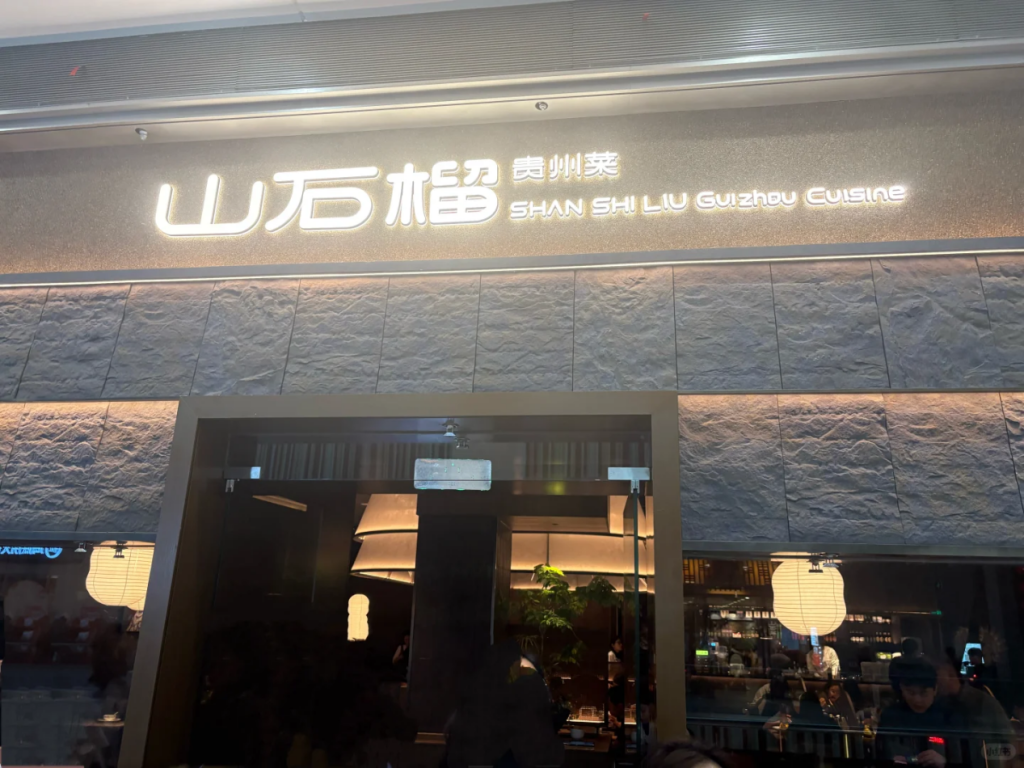
This approach satisfies both consumer expectations for authentic flavors and deeper needs for cultural experience in business dining or tourism.Representative Brands:Shan Shiliu (Guizhou cuisine): Standardizes Guizhou’s spicy-sour flavors, winning Michelin Plate and “Restaurant Dark Horse of the Year” awards. Locations in Shanghai and Nanjing serve as cultural experience windows.Quanjude (Beijing roast duck, since 1864): Combines traditional roasting skills with intangible heritage recognition, operating both domestic and overseas franchises. Its Wangfujing store once achieved single-day revenue over 1 million RMB. Seasonal menus and co-branded products attract younger demographics.Shu Yi Shu Er Original Mala Cai (Chengdu): Maintains under 3% closure rate, with a self-built 5,000 sqm seasoning factory reducing costs by 15%. AI-based “Mala Cai Cloud” achieves 92% site selection success. Over 1,700 stores nationwide, with expansions to the Philippines and Cambodia.Sifangzhuo Hakka Cuisine (Fujian, 2014): Focuses on local ingredients and traditional Hakka courtyard décor, creating a home-style dining atmosphere. 27 stores in Fuzhou and Sanming, with plans to expand nationally.Desserts and Bakery Segment.Desserts and bakeries target daily leisure consumption, acting as a flexible complement in the dining ecosystem. The segment relies on high-frequency consumption + instant experience:High-frequency: Afternoon tea, snack cravings, gifts.
Brands respond with a “small yet exquisite” product matrix.Instant experience: Freshly made on-site, appealing store ambiance, turning a pastry into an emotional comfort object.Representative Brands:Du Su Shijia (Shanghai, 2013): Combines traditional Chinese cakes with Western techniques. Flagship products include signature pork chop buns (over 1 million sold in six months) and Napoleons (3 million annually), with over 120 stores across the Yangtze River Delta.Mr. Stone’s Oven (Jinan, 2014): Uses local ingredients like Guangxi taro and Shandong potatoes. 2024 expansion into Beijing Chaoyang He Sheng Hui caused long queues; also opened community stores in Tai’an and Linyi.LELECHA WONDER (Suzhou, 2024): Signature milk toast and walnut desserts achieve over 150,000 RMB monthly revenue at Shanghai Century Hui store, leveraging the parent brand’s momentum to attract young consumers.Bao Shifu: From Beijing’s “Baozi West Pastry” in 2004 to Shanghai flagship in 2017, combating counterfeits through IP protection and fresh products, becoming the go-to choice for gifts.Luxi River (Nanjing, 2013): Over 400 stores in 41 cities, supported by seven modern factories. Its red bean and salted egg mooncakes received “China Famous Cake” recognition and ranked among the “Top 10 Bakery Brands of 2024,” serving cross-generational needs.Industry Trends and Future Outlook.The 2025 structural adjustment of the restaurant industry reveals clear trends driven by product innovation, efficiency improvement, and market expansion. New products no longer simply layer flavors—they build differentiated competitiveness.
Light and modular store models, such as Rou Rou Da Mi’s small yet profitable stores and Mr. Stone’s combination of community + supermarket stores, exemplify modular expansion and category diversification to fit niche consumption scenarios.Marketing and supply chain upgrades inject both soft power and hard support: Liulang Bubble leverages local culture to drive social media, Zhu Fugui Hot Pot creates word-of-mouth growth via Xiaohongshu, and AI-enabled logistics and production systems (Mala Cai Cloud, Luxi River factories) ensure stable, scalable expansion.Leading brands are exploring both domestic and overseas markets, e.g., Yu Jian Xiao Mian pursuing IPO and international expansion, Xi Ta Lao Tai Tai entering Southeast Asia, and Guang Shun Xing expanding nationwide. This indicates that mid- and lower-tier markets and central-western regions will continue releasing consumption potential, while Chinese cuisine moves from regional uniqueness to global accessibility.The future of competition lies not in individual brand breakthroughs but in the collective advancement of the entire Chinese dining sector across products, efficiency, and markets, balancing efficiency & experience, innovation & tradition, local & global. Brands anchored in consumer demand, supported by supply chain and digitalization, will not only unlock domestic growth but also bring authentic flavors and cultural heritage to the global stage, representing the inevitable trajectory toward a mature and internationally recognized Chinese restaurant industry.