From Rust Belt to Cultural Hub: How Old Factories Are Reinvented to Engage Generation Z
From Rust Belt to Cultural Hub: Exploring the Historical Value of Old Factory Renovations.With industrial upgrades and policy guidance, the transformation of old factories has become one of the hottest tracks in urban renewal. As high-tech industries, information technology, and other service sectors rapidly rise and thrive, many cities in China are entering a phase of industrial transition. Traditional industries in central urban areas have gradually relocated, and the historic factory buildings that symbolize the industrial era have lost their original production function. These vacant, abandoned factories have become scattered across the city centers. Meanwhile, land policies have become more regulated, with increasingly refined land-use requirements, making it difficult for real estate companies to acquire land. At the beginning of the 21st century, the value of these old factories was rediscovered, and cities like Shanghai and Beijing led the charge into the era of factory renovation. A large number of old factories were repurposed, their inherent industrial-era history and cultural value revived, gradually becoming cultural landmarks and city icons. As we enter the age of real estate stock, urban renewal has become the new trend in shaping cities and developing businesses.Today, with the intermingling of diverse cultures, revisiting the historical, cultural, and social value of industrial relics has given old factories the opportunity to enrich urban landscapes in a new form.
In recent years, a great number of old factories have been repackaged and revitalized, breathing new life into once-forgotten spaces. Let’s look at the unique historical value of these old factory buildings from multiple angles. The renovation of old factories has flourished like mushrooms after rain, transforming former rust belts into new cultural hubs. But what exactly is the value of these renovations in terms of city culture and consumer development?First, there’s the location advantage. Old factories are concentrated in regions that were once major industrial bases, such as Central and Southern Liaoning, Beijing-Tianjin-Tangshan, the Shanghai-Nanjing-Hangzhou corridor, and the Pearl River Delta. As city boundaries expand, the areas where these old factories are located are now prime real estate in the city center. In an age where developable space in core cities is shrinking, these old factories provide an opportunity for urban renewal, increasing the potential for real estate companies to enter prime areas.Second, there’s the cultural value. With the economy continually innovating, people’s demand for spiritual and cultural enrichment is also on the rise. Older generations seek to evoke past memories, while younger generations are curious about life from a bygone era. By leveraging the unique architectural design and the industrial-era memories embedded in these old factory buildings, cities can reshape their cultural identity, achieving genuine urban renewal.Third, the architectural advantages of old factories. The large-scale, multifunctional, and complex architectural forms of old factories provide ample space for renovation projects.
This opens up opportunities for creating diverse, mixed-use spaces that cater to the pursuit of individuality among younger generations, thus giving these projects higher commercial value. They lead the way in cultural consumption and lifestyle concepts. Additionally, renovating old factories is generally more cost-effective than constructing new buildings from scratch.Finally, old factory renovations offer developers significant demonstration, foresight, and social benefits. From traditional residential buildings to commercial real estate, from living communities to the integration of industry and urban development, the real estate business model is evolving. The historical and cultural value inherent in old factories can empower developers, offering social benefits alongside economic gains. They also serve as experimental grounds for real estate companies to explore new business strategies and build new brands.Opportunities Amidst Challenges: Real-World Difficulties in Old Factory Renovations.The location advantage, cultural value, visual appeal, and distinctive design of old factories make them prime candidates for urban renewal. The renovation trend has gradually expanded from first-tier cities to second- and third-tier cities, evolving from single-use industrial parks into mixed-use complexes that combine office space, hotels, residential areas, cultural hubs, and commercial ventures. However, the influx of developers has led to uneven project quality, with significant regional disparities.Old factories face many challenges during the renovation process: how to harmonize large-scale factory spaces with small-scale consumer spaces; the large, open interiors that contribute to the building’s industrial aesthetic can present challenges when integrating retail, dining, and other smaller-scale commercial spaces.
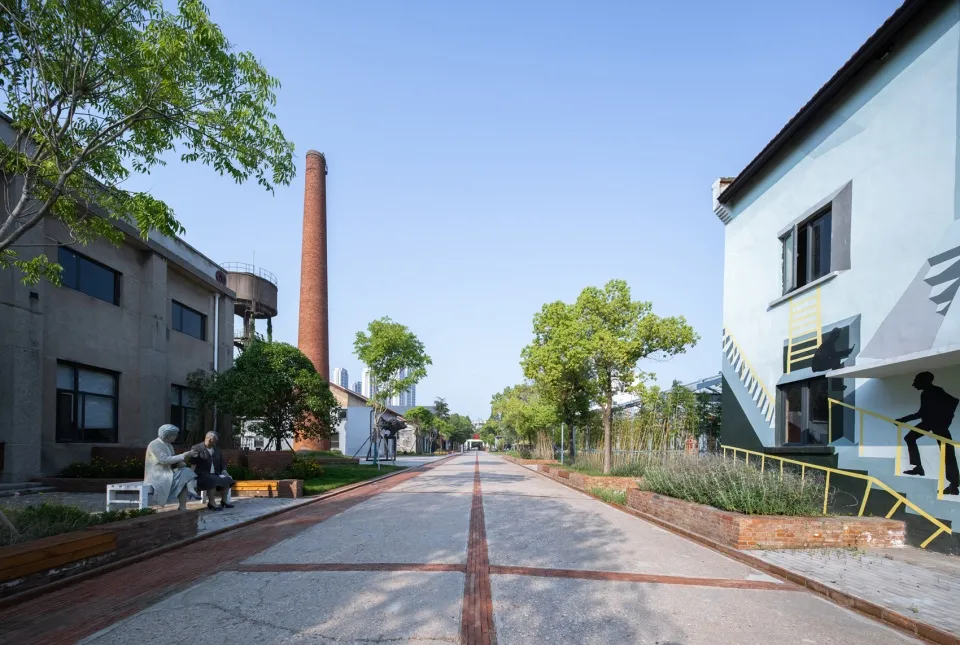
This issue permeates the entire development process, including architecture, leasing, and operations.Another challenge is how to continuously inject new content into old spaces while engaging with Gen Z consumers. New projects keep coming, but older factory renovation projects—like the 798 Art Zone in Beijing—have been around for over two decades. New projects must capture the attention of the younger generation of consumers and become phenomenon-level destinations. Older projects, on the other hand, need to retain their appeal to keep drawing in visitors and become sustainable in the long run. How can developers position projects and enhance functionality based on regional characteristics, achieving a balance of “micro-renovations” in older spaces? This is an ongoing challenge in the industry.Avoiding the “Cultural Trap”: Crafting Authentic Cultural Landmarks.Culture is a powerful tool for urban renewal, but many projects have fallen into the “cultural trap” of building cultural shells with no real substance. In some cases, developers overly focus on cultural symbols or simply construct cultural centers and museums for the sake of city image projects, without meaningful content, leading to resource waste. The key to breaking through homogenization in factory renovations lies in truly uncovering local culture and creating cultural landmarks that reflect the unique identity of the city.Crafting an Industrial-Era Dream for Modern Urban Life.When discussing the success of Wuzhen, Chen Xianghong noted, “Wuzhen modernized with infrastructure, a water factory, and Wi-Fi throughout the area, bringing everything that modern communities have into the ancient town.
In some ways, visitors love Wuzhen because it offers an idealized version of life they desire, combining modern comforts with traditional charm.” Similarly, the renovation of old factories is not about taking people back in time or recreating the past; rather, it’s about offering an immersive industrial civilization experience in a modern, convenient environment.The renovation of old factories is, in a sense, about creating a dream of the industrial era within the context of modern urban living standards. Preserving history and revitalizing industrial heritage while participating in the creation of a city’s collective memory is critical. Cities that have emerged as major metropolises are increasingly seeking collective memories and emotional connections, and historic landmarks—like industrial sites—become vital carriers of this city memory.Cultural Consumption as a Destination: Combining New and Old to Create Unique Cultural IPs.The transformation of old factories into cultural consumption destinations allows for the exploration of local culture, blending old and new elements, and shaping personalized cultural identities. These projects aim to create a vibrant arts and cultural atmosphere, market opportunities, and a unique sense of space. This often includes introducing flagship events and collaborations with international brands to raise the project’s profile and city status.Listening to community needs and creating new forms of community life that match the city’s unique characteristics is crucial. Not all factory renovation projects need to carry heavy cultural or historical significance, but for those old factories near large residential areas or with deep community ties, focusing on community service should be a priority. By introducing new brands and services into the neighborhood, developers can shape a new community ecosystem.