CATL: Worried About the ‘Second Curve
Recently, the “king of power batteries,” CATL (Contemporary Amperex Technology Co., Ltd.), released its 2025 mid-year report, showing its strong profitability as usual. In the first half of the year, the company achieved a revenue of 178.886 billion yuan, a 7.27% year-on-year increase; net profit attributable to shareholders reached 30.485 billion yuan, up 33.33%. Its profitability ranks among the top in domestic publicly listed companies. However, despite such a “beautiful” financial report, the capital market gave a drastically different response. From July 30 to August 1, CATL’s A-shares and H-shares fell by 10% and 13%, respectively, with a rebound only occurring on August 4. Beneath the “king” of a trillion-dollar market cap, there seem to be subtle cracks forming. Some investment institutions pointed out that CATL’s revenue fell short of expectations, and its high short-term valuation was the primary reason for the bearish outlook. CATL has long been a “darling” in the eyes of investors, but as with any stock, prices don’t just go up without ever going down—the return to rationality in the capital market is always the norm. For CATL, the real challenge lies not just in the surface-level performance data. As CATL’s chief scientist, Wu Kai, once said: “Good technology cannot be enjoyed in isolation; it should be shared with everyone.” The key to “King Ning’s” continued leadership is how to activate industrial momentum through ecosystem collaboration and transform from a “technological leader” into an “ecosystem player.”
In summary, CATL’s semi-annual report once again showcased its market position as the “battery king,” but this impressive financial report also harbors concerns. First, compared to the scale of profit, CATL’s revenue growth is somewhat lackluster. Investment institutions have pointed out that the growth of its core business did not meet industry expectations, especially in Q2, where revenue was 94.181 billion yuan, a year-on-year growth of 8.26%, falling short of Goldman Sachs’ forecast of 104.7 billion yuan and a 10% growth rate. According to the data from the China Automotive Power Battery Industry Innovation Alliance, in the first half of 2025, CATL still ranked first in the domestic power battery installation ranking with 128.6GWh of installed batteries, but its growth rate lagged behind the market average. Its market share of installed batteries dropped to 43.05%, a decrease of 3.33 percentage points compared to the previous year, making it the company with the largest market share decline among the top 15.Secondly, the ongoing industry price war has continued to drag down CATL’s profit margin. The domestic power battery market is fiercely competitive, with lithium carbonate prices continuously falling, leading to an overall revenue decline in the industry, which has impacted CATL’s revenue as well. According to Dolphin Investment Research, the unit price of CATL’s power batteries dropped from 0.63 yuan/Wh in the second half of 2024 to 0.61 yuan/Wh in the first half of 2025.
In the first half of 2025, the gross margin of the power battery system was 22.41%, a decrease of 1.07% year-on-year.Even a strong company like “King Ning” faces pressure on both sales and profits. In recent years, as more and more car manufacturers choose to “leave CATL” by developing their own in-house batteries, CATL’s domestic market share has dropped from 52.1% in 2021 to the current 43.05%. However, regaining the market share it has lost may not be as difficult as it seems. In today’s fierce price war within the automotive industry, if CATL slightly reduces prices, many car manufacturers will likely be willing to partner with them, win the price war, and then consider developing their own batteries. Therefore, maintaining its current market share may be a “strategic choice” for CATL.Within the new energy industry, many car manufacturers jokingly call CATL a “thorn in the side,” as it is not only difficult to negotiate prices with but also requires upfront deposits to secure battery orders when there is a supply shortage. A few years ago, the then-chairman of GAC Group, Zeng Qinghong, remarked that car companies were “working for CATL.” Recently, the chairman of Changan Automobile, Zhu Huarong, once again called out to CATL, saying, “We hope sodium-ion batteries can be reduced by 30%-40% in price, but we will still buy them even if they don’t lower prices.” However, CATL Chairman Zeng Yuqun firmly believes in the principle of “you get what you pay for”—creating higher profit margins through leading battery technology, then reinvesting the profits into new research and development.
Over the years, CATL’s gross margin has consistently remained above 20%.One reason is that CATL has strong influence over its supply chain. Upstream, it binds key suppliers through equity stakes, gaining more pricing advantages; downstream, it secures long-term contracts with car manufacturers through joint development and exclusive supply agreements. Additionally, the power battery industry has gradually matured in recent years, with upstream resource supply remaining stable; battery manufacturers, after conceding some pricing and performance, now have the ability to compete with CATL; car manufacturers are also actively controlling CATL’s share of supply. Against this backdrop, CATL has made efforts to avoid a dominant position and maintain a relatively balanced industrial ecosystem.From a longer-term perspective, technological innovation will inevitably face limitations. For example, the once-innovative Kodak photo paper was eventually overshadowed by more advanced electronic imaging waves. As Zeng Yuqun once said, “Not all new technologies have to come from CATL. It’s fine if others do it first. What matters most to us is whether we can laugh until the end.” Therefore, the key to CATL’s continued leadership is not only converting technological innovation into a sustainable iterative industrial ecosystem advantage but also working with partners in the industry to grow the market size.Looking for a “new story” and staying ahead is key.
But from another perspective, the power battery industry’s ecosystem is trending toward balance, which means the current domestic new energy industry structure is largely fixed. CATL’s leadership is unlikely to be replaced in the short term, but maintaining rapid growth will be much harder. It is foreseeable that if CATL does not actively seek new growth curves, it will eventually face an “inflection point,” whether it be a decline in growth, a drop in valuation, or even a decline in revenue.In the past two years, CATL has been making efforts “on all fronts,” attempting to seize every potential new track in both domestic and international markets. In terms of battery products, CATL has continued to increase its research and development efforts, releasing new products such as the Xyao dual-core battery, sodium-ion battery, and second-generation supercharging battery. In addition, its investment in solid-state batteries and photovoltaic batteries has been ongoing. The sodium-ion battery is the world’s first car-grade sodium battery that can be mass-produced, known for its safety, environmental friendliness, and low-temperature adaptability. The Xyao dual-core battery is considered more suitable for the smart driving era, reducing vehicle commuting costs to just 0.1 yuan per kilometer. These new products will continue to widen the gap between CATL and second-tier battery manufacturers.In terms of its new energy ecosystem, CATL has built a battery-centric battery swapping service.
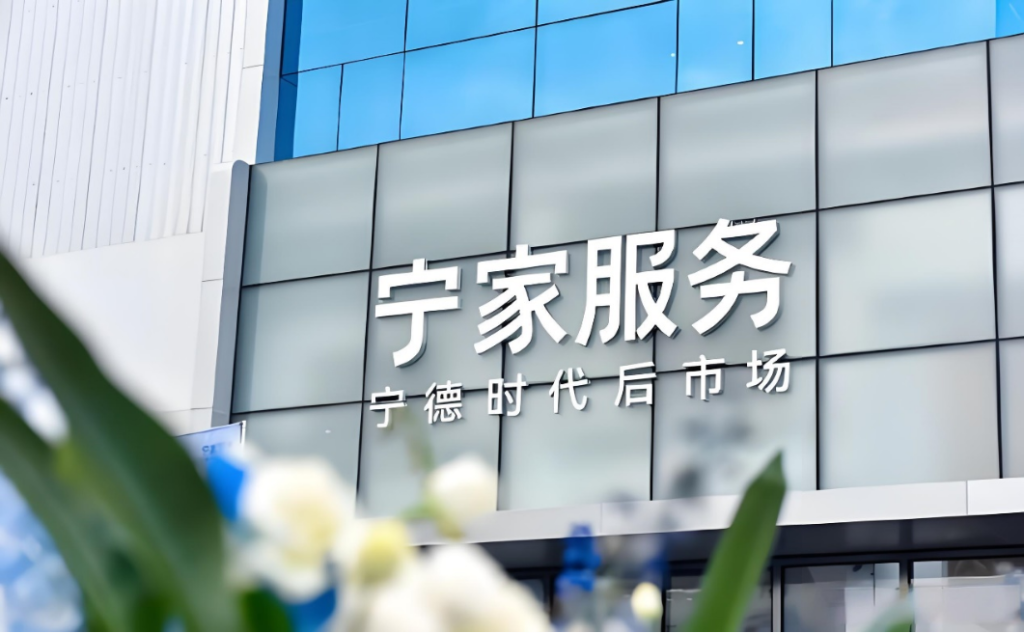
In February this year, CATL announced a partnership with Didi to build battery swapping stations; in March, it entered into a strategic cooperation with NIO to create the world’s largest battery swapping network; recently, it also announced collaborations with Times Electric, Shenzhou Car Rental, and CCB Leasing to create an ecosystem for the car rental industry. At the same time, CATL is also vigorously developing a consumer-facing brand, launching the “Ningjia Service” aftermarket brand, offering services such as battery testing, maintenance, and certification training through related mini-programs.In cross-industry investments, CATL has been targeting emerging industries, such as electric vertical takeoff and landing aircraft (eVTOL) and the embodied intelligence startup Galaxy General. Through investments in Peak Fly Aviation, CATL has established Times Electric Marine to extend its battery technology into new maritime scenarios. A few weeks ago, it also partnered with T3 Mobility to explore customized development for Robotaxi based on the Panshi chassis technology it launched last year. This series of innovations and cross-industry attempts reflects CATL’s ambition to transition from a battery manufacturer to an energy technology ecosystem service provider.However, the transition from a manufacturer to an ecosystem service provider is not easy. As Zeng Yuqun once publicly stated, “It seems like CATL has already made it, but in reality, it is far from enough. We still need to refine it and work on it for many years.” Therefore, while CATL has expanded its business map, not all new ventures will be firmly invested in. Some new technologies and businesses are still in the exploratory phase, but the battery swapping business is clearly its focus.