After the Hoardings, Before the Future
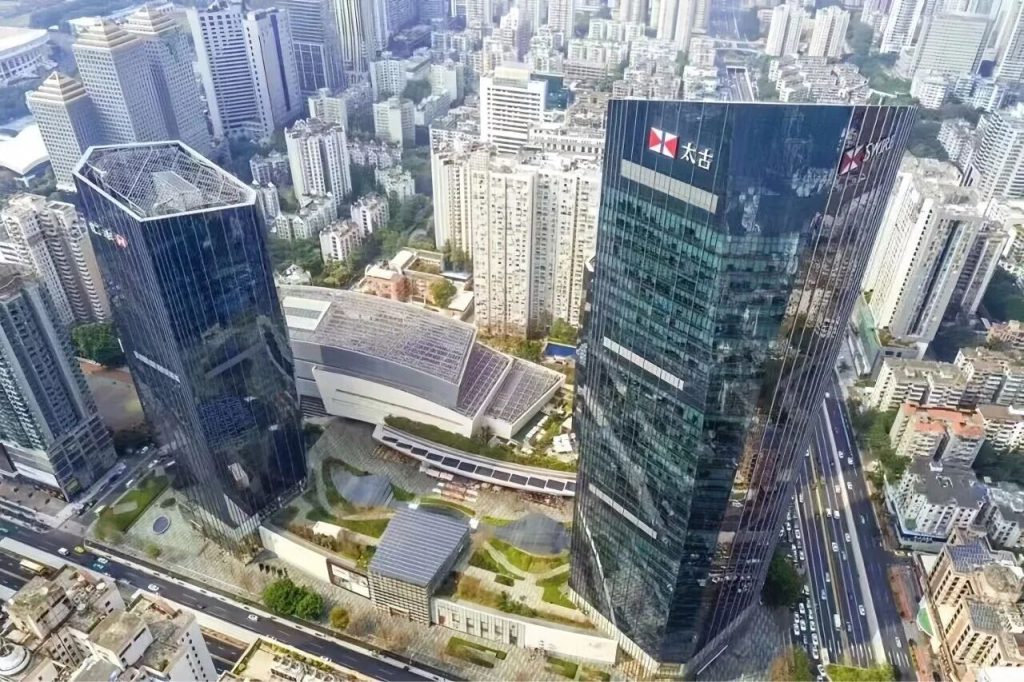
“Guangzhou Taikoo Hui Expansion: A Sneak Peek Into the Future”.The “expansion of Guangzhou Taikoo Hui” is clearly no longer a secret. The phrase “not big enough” could be considered a reflection of its current “happy dilemma.” For years, compared to other top luxury shopping centers in China, Guangzhou Taikoo Hui’s size has always seemed a bit smaller. This has led to it being in a perpetual “high demand, low supply” situation, where many brands, whether it’s expanding boutique spaces or turning pop-up shops into permanent stores, have had to endure a long “waiting period.” This has prompted the inevitable next step for the project—expansion. Before the expansion is completed, Guangzhou Taikoo Hui has launched a special commercial preview aimed directly at its consumers. Not long ago, if you passed by the busy intersection on Tianhe Road, you were likely to notice a large “hoarding landscape.” It was like a magnified “city scroll,” offering an extraordinary visual experience, far beyond the screen and beyond expectations, through carefully crafted artistic visuals. For modern people who are used to scrolling through the small screens of their mobile phones, this could be considered a true form of “new media” expression.But what message is Guangzhou Taikoo Hui trying to convey behind this? Expansion Blueprint: From “Commercial Hub” to “Community”.The future Guangzhou Taikoo Hui will no longer just be a shopping center. With the upgrade and transformation of Phase II, as well as the ongoing development of Phase III, the total commercial space of Guangzhou Taikoo Hui will exceed 200,000 square meters.
More significant than the physical expansion, however, is the shift in its positioning—from a luxury retail hub to a “diverse lifestyle destination.””We’re not just building a commercial complex, but creating a community.” The concept of “community building” is not just about stacking spaces, but about creating a dynamic synergy between the functions of Phase I, II, and III, encouraging the development of the surrounding neighborhoods and invigorating the entire area organically. This vision was shared with us by Jessica, General Manager of Swire Properties (Guangzhou). This idea comes from Swire Properties’ successful implementation in Hong Kong, with the “Swire Plaza + Tai Kwun” concept, where the core project helps stimulate surrounding retail districts, forming a highly interactive “commercial cluster.” This concept is now being extended to Guangzhou.With the key opportunity presented by the Phase II and Phase III expansions, Phase II will be developed into a “lifestyle district.” “In Phase II planning, we will upgrade from two key perspectives: on one hand, we’ll address traditional district challenges like parking, and on the other hand, we’ll focus on shaping the district’s atmosphere and narrative.” Jessica shared, “Phase III aims to break beyond the traditional shopping and dining frameworks by introducing more stayable spaces, making the space itself a destination.”In the future, commercial venues shouldn’t just divide people by age or purchasing power, but should strive to become a “common choice for different people.” When white-collar workers, tourists, students, and families can all find their own spaces here, the venue will truly embody the warmth of a community.
This is the consumption logic that “Big Taikoo Hui” hopes to reconstruct: people may stop by because of a soul-stirring art exhibition, linger for a cup of expertly crafted coffee, or be drawn in by a neighborhood-style community event. Shopping will no longer be the primary goal, but rather a natural extension of a great experience. Through Jessica’s narrative, we can see that “emotional needs” are also one of the core values that Guangzhou Taikoo Hui is committed to protecting.Hoardings as a Curatorial Practice for City Engagement and Information Visualization.“We’ve been exploring this practice for over a decade, making hoardings a silent but powerful dialogue between the mall and its customers,” Jessica said. During the construction of Guangzhou Taikoo Hui in 2011, the mall used a series of imaginative hoardings to create a classic preview of the commercial space: witty phrases and theatrical scenes depicted a series of stories about a couple of urbanites enjoying their time in the mall. These artistic hoardings went far beyond their traditional function of blocking construction zones—they became an important medium for communication between the mall and the city, an informal introduction to the public, and a narrative expression that “says more than words.” Today, hoardings have taken on the important role of warming up the market and building anticipation before the official opening of various commercial spaces.The art on the hoardings at Guangzhou Taikoo Hui not only visualized the concept of “Big Taikoo Hui,” but also localized international resources to advocate the mall’s “attitude” toward promoting lifestyle and emotional values to its consumers.
This not only demonstrates Guangzhou Taikoo Hui’s standing as a high-end commercial brand but also subtly reflects the social responsibility upheld by Swire Properties as a city developer.Luxury Redefined: The Value of Time and Community.“The most luxurious thing is not goods, but time—time spent with family and friends. True luxury isn’t just reflected in price but should be integrated into the environment and experience, becoming a composed, self-satisfying lifestyle attitude.” This new definition of “luxury” is fully expressed through the artistic hoardings. In the past, people often associated Guangzhou Taikoo Hui with “ultra-luxury,” but the introduction of these art hoardings marks a shift towards the mall’s proactive integration into the community and its deepening emotional connection with the public.Art and Business: A Two-Way Narrative Reconstruction.The fusion of art and business at Guangzhou Taikoo Hui is rooted in a shared understanding and mutual goals. Before collaborating with French artist Clément Thoby to create the hoarding paintings, the Taikoo Hui team spent several months selecting an artist. They were not merely looking for a famous name, but rather an artist whose work aligned with the “Big Taikoo Hui” philosophy. Upon closer inspection of the paintings on the hoardings, one can notice many “surreal” artistic expressions: the glass windows reflecting the Guangzhou Tower and Zhujiang New Town; shoppers walking their pets while enjoying views of the lush Baiyun Mountain nearby. Thoby seamlessly blends the landmarks of Guangzhou with the daily lives of its residents and the scenes of Guangzhou Taikoo Hui, creating a “surreal local feel” and “enterable dreamlike ambiance.”
His delicate brushstrokes and layered colors strike a poetic balance between abstraction and realism, creating a unique narrative space.For Thoby, “Guangzhou is a charming and vibrant city, and Guangzhou Taikoo Hui is a stage for artists to showcase their talents.” This perspective not only reflects Guangzhou Taikoo Hui’s keen understanding of consumer aesthetics but also makes the hoardings not only visually shareable but emotionally resonant as well.Transforming from a “Commercial Hub” to a “Community”.This shift from a “commercial hub” to a “community” reflects Guangzhou Taikoo Hui’s profound understanding of the essence of commerce: the real competitive advantage lies in the mall’s ability to grow alongside the city and its community. When commercial spaces can carry cultural content, respond to emotional needs, and stimulate community vitality, they transcend mere transactional venues and become organic, living components of the city’s fabric. This transformation represents an evolution in business paradigms—from operating spaces to fostering relationships, from selling goods to offering a lifestyle.The large-scale art hoardings at Guangzhou Taikoo Hui depict not just the physical expansion of a commercial venue, but an evolution in commercial philosophy: space is no longer a cold container but a link that weaves social relationships; goods are no longer the endpoint of a transaction but an annotation of a quality life. Although the hoardings will eventually be removed, the living scenes they have previewed will take root and flourish in the city. This dialogue initiated by the artistic hoardings will ultimately transform into the daily happiness that everyone can feel and touch.