After a Multi-Dimensional Renewal, This Is How the Shopping Mall Wins Your Heart!
After Multi-Dimensional Renewal, This Is How Shopping Malls Win Your Heart.Driven by both consumption upgrades and market competition, commercial real estate is moving away from the traditional single-purpose “product-selling venue” model, entering a renewal cycle centered on value reconstruction. From brand-level iteration to spatial experience innovation, and from deep digital integration to systematic upgrades across the “people, products, and spaces” chain, mall renewal is no longer about piecemeal fixes.The core of this transformation lies in shifting from meeting existing consumer needs to creating new consumption demand, from competing for foot traffic to building long-term value. By leveraging the synergy of brand, space, and digital dimensions, malls are redefining the way they connect with consumers and establishing sustainable competitive advantages.Brand-Level Leap: First Stores and High-End Formats Build Core Barriers.Brands are the lifeblood of commercial real estate, and the introduction of first stores and high-end formats has become a key strategy for malls to break away from homogeneous competition and attract targeted customer groups.As consumer demand becomes increasingly personalized and quality-focused, shoppers are no longer satisfied with standardized brand offerings. They seek unique and scarce experiences. Therefore, introducing first stores, flagship stores, and high-end brands not only generates natural foot traffic and social buzz, but also enhances the mall’s positioning through the brand’s tone and influence, creating a differentiated competitive advantage.This brand matrix renewal is not merely about stacking brands. Instead, it involves a precise layout based on city consumption patterns and mall positioning, building a “first store + flagship store” hierarchy, combined with deep integration of formats and innovative experiences, achieving an upgrade from “brand aggregation” to value symbiosis.
The mall becomes a hub for urban trend culture and high-end consumption.For example, in the premium fragrance and cosmetics segment, Guangzhou Tianhe Paradise Mall exemplifies best practices. It continuously introduces South China’s first Amouage store, LE LABO’s first new-concept store, and over 40 fragrance and cosmetics brands, creating scale effects. Additionally, it innovatively combines fragrance experiences, Lingnan intangible cultural heritage, and digital technology into an immersive New Chinese-style fragrance garden, upgrading a single beauty purchase into a multi-cultural experiential journey, redefining boundaries in beauty consumption.In the high-end luxury sector, benchmark malls in different cities are enhancing their flagship store offerings to improve their high-end brand matrix. For instance, Chengdu Yintai Center in99 focuses on Southwest China’s premium consumer market, introducing the region’s largest FERRAGAMO flagship store, nearly 1,000 square meters in size. Its design blends modern and classic elements, showcasing the brand’s premium image while revitalizing the mall’s luxury offerings.Similarly, Beijing Huiju continuously leverages first-store economy for brand renewal. In September, it introduced the official Pokémon Trading Card Game Pavilion, filling the regional gap in trading card entertainment. THE NORTH FACE opened a new store on Level 1, becoming a hub for outdoor consumption. Outdoor streetwear brand Lanqi also completed a renewal in July, combining functional outdoor apparel with Japanese streetwear style to enrich the sports-leisure offering.
Fashion IP collaborations further empower cross-industry experiences; for example, Beijing Fashion Week in September debuted at the mall as part of the “2025 Global Launch Festival – Fashion Special”, featuring ten major brands presenting their 2025 Fall/Winter collections, enabling a one-stop experience for viewing shows, discovering products, and purchasing.As a representative of high-end commercial spaces in Central China, Wuhan Wushang MALL deeply renewed core brands, fully upgrading its LV boutique with artistic displays and premium materials, enhancing the single-store experience while solidifying its leading position in the regional high-end market.Spatial Experience Innovation: From Shopping Venues to Social Destinations.If brands attract consumers, then space and experience retain them. In today’s experience economy, commercial real estate goes beyond physical functionality, emphasizing emotional connection and social interaction.Through thematic scenography, cross-format integration, and optimized spatial design, malls are transforming from shopping venues into lifestyle experience destinations, extending dwell time, boosting conversion rates, and enhancing brand loyalty.The logic behind spatial renewal lies in deep integration of culture, art, and nature with commercial settings, creating unique, Instagram-worthy experiences. This allows consumers to engage emotionally and socially, moving from passive consumption to active visitation.In creative themed experiences, malls in Guangzhou are exploring the fusion of culture and trends.
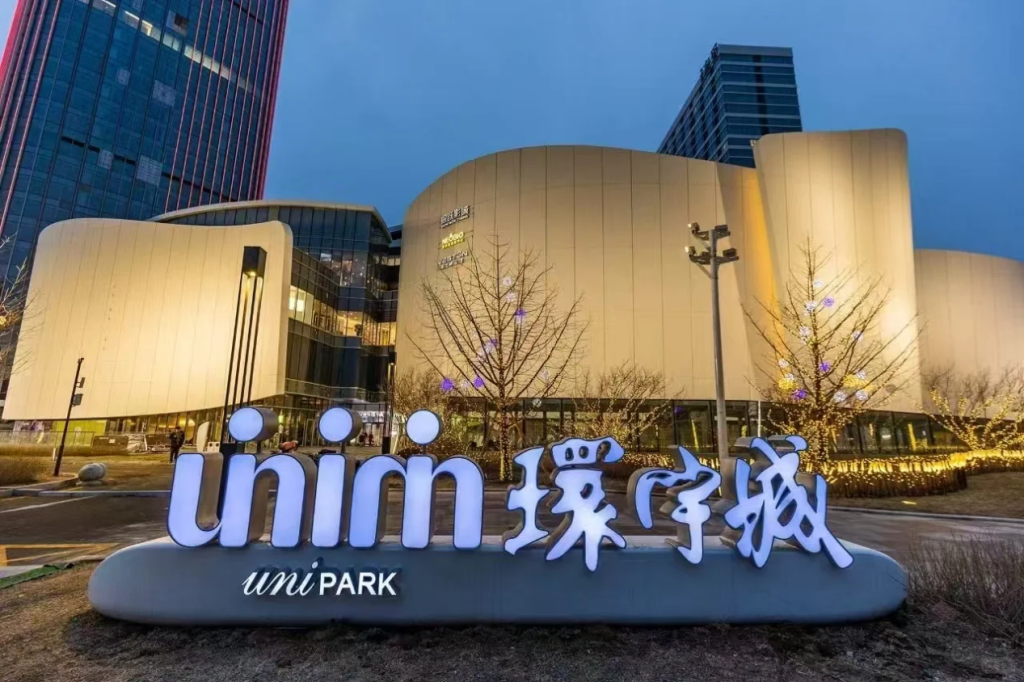
For example, Beijing Road Tianhe City launched the “Flowers Bloom Across the Nation – Splendid China” Floral Exhibition during National Day, embedding national pride into floral design. To attract younger demographics, the mall collaborated with miHoYo’s Genshin Impact for a limited-edition poster photo activity, merging traditional culture with pop culture trends.Guangzhou Tianhe Link City follows a phased approach: upgrading the outdoor district “Pingchuan Night Alley” with autumn festival elements, creating seasonal shopping atmospheres, and building a 230㎡ “Super Cat Space” with seven interactive zones and over 60 purebred cats, creating multi-generational experiences for families and pet enthusiasts.Additionally, spatial hardware upgrades enhance mall recognition. Chongqing Beicheng Tianjie revamped its constellation plaza façade with glass boxes and tiered design, embedding naked-eye 3D screens to enhance technology appeal. Its atrium combines high ceilings, a high-street garden skylight, and greenery, creating spaces that are both comfortable and socially engaging.Some malls integrate nature and cultural tourism into their offerings. Guangzhou Zhengjia Plaza upgraded its Polar Ocean World, adding Deep Sea Mystery and Coral Reef Adventure zones, using advanced aquarium technology and interactive multimedia for immersive ocean exploration. Chongqing Guanghuan Shopping Park optimized its Mu Guang Forest Garden, adding new plants and scenic installations, enhancing lighting and pathway design, providing a relaxing natural retreat while creating a distinctive traffic-attracting landmark.
Deep Digital Integration: Reconstructing Operations and Consumer Journeys.Digitalization has become the foundation of mall renewal, enabling end-to-end “people, products, spaces, and vehicles” data integration, improving operational efficiency and consumer experience.From online-to-offline consumption loops, to intelligent leasing and operations, to precision membership management, digitalization is no longer an optional enhancement—it is key to a mall’s core competitiveness.By leveraging digital tools, malls can capture precise consumer needs, optimize resources, improve decision-making, and offer convenient, personalized services, creating mutual value for businesses and users. This transformation is strategic, building a digital ecosystem covering the entire consumer journey and operational chain, ensuring technology serves business objectives.Different malls adopt differentiated digital strategies. Shaoguan More City focuses on optimizing the consumer journey, partnering with Weimob to build an online-offline mini-program ecosystem, simplifying points collection via photos, while gathering consumption data. It also integrates frictionless parking, and plans to expand store navigation and smart driving features.Zhuhai Wanda Management focuses on operational efficiency, launching a smart mall platform that creates digital twins of 500+ malls, using AI algorithms for brand-store matching, reducing leasing cycles from 28 to 18 days (a 35.7% efficiency increase) and shifting from manual to intelligent leasing.Leading projects use mature AI systems to enhance operations systematically. Shanghai Qiantan Taikoo Li, Beijing Yintai Place, and K11 Art Mall implement Aibee’s AI Mall OS, digitizing parking and mall operations.
Yintai Place also introduced AR travel photography check-ins during its 9th anniversary, linking offline experiences with social media, increasing engagement and traffic.Other malls emphasize membership precision management and cross-region service standardization. Lanzhou Wangfujing Department Store leverages the Wangfujing Online mini-program with JD Direct Shipping, breaking regional consumption limits and using backend data to deliver personalized offers. Wushang Group integrates Weimob Smart Points, creating a flexible loyalty system for multi-mall operations and brand-specific rules. China Overseas HuanYu Commercial advances digital synergy across Beijing, Shanghai, Chengdu, and Foshan, offering unified navigation, AI customer flow analysis, and consistent smart services, while enabling HQ-level operational insights.Three-Dimensional Renewal: A Consumer-Value Revolution.Mall renewal is essentially a deep revolution around consumer value. Brand-level leaps lay the competitive foundation, spatial innovation creates emotional connections, and digital integration ensures efficiency and experience.These three dimensions interact and reinforce each other, forming a new value ecosystem. In an environment of continuously evolving consumer demand and market change, renewal is not a one-off project, but a long-term strategic practice.The future belongs to malls that continuously focus on consumer needs, with brands as the core, space as the carrier, and digital as the wing, constantly pushing the boundaries of experience and operational efficiency, achieving both commercial and social value, and driving the industry toward vibrant, human-centered, and sustainable development.