From the Deep Sea to Your Table: How Xiaoxiang Supermarket Streamlines the 36-Hour “Sea-to-Table” Journey of Yellow Croaker
In the idealized vision of a perfect fish, there seems to be a vast divide between the “deep sea” and the “dinner table.” Among various seafood products, the supply and demand imbalance of large yellow croaker is particularly striking. On one side, there are wild-caught yellow croakers, priced at thousands of yuan per kilogram and considered the “Hermès of fish” – rare and highly sought after. On the other side are farmed yellow croakers, often loose in texture and sometimes with a muddy taste, which make their way to the mass market via a low-price strategy.Consumers have long been waiting for high-quality seafood that is firm, fresh, traceable, and convenient to buy, but these expectations have often remained unfulfilled, caught between ideal and reality. In traditional retail models, it’s always been difficult to balance quality with scale, and experience with efficiency. Geographic limitations, technological constraints, cost pressures, and the inherent business logic have all contributed to this gap.But with the advent of Retail 3.0, where the core competition focuses on product quality and user experience, new solutions are emerging. Recently, Elephant Supermarket launched deep-sea wild yellow croaker, attempting to answer a pressing question: Can instant retail, by reshaping the supply chain, deliver this fish fresh and stable to thousands of households in inland cities within 36 hours?This challenge is not just about large yellow croaker; it represents a broader issue in the seafood industry.
As living standards rise, urban families’ demand for high-quality animal protein, particularly seafood with high nutritional value, has increased. However, seafood is inherently non-standardized, highly perishable, and time-sensitive. Long logistics chains, complex temperature control requirements, and high transportation costs cause the flavor and freshness of a good fish to diminish during the traditional multi-level distribution process.As a result, consumers’ expectations have long been unmet. Behind this systemic contradiction lies a deep-seated limitation in traditional retail business models. In systems where real estate and channel entrance fees are the core revenue drivers, retailers essentially act as landlords, with interests that don’t always align with deeply revamping the supply chain and establishing long-term quality standards. This role limits their ability to control product quality and costs effectively, leading the industry into cycles of homogenization and price wars. The long-standing dilemma of large yellow croaker highlights these problems, turning it into a litmus test for the Retail 3.0 model. Can a new business logic break this “impossible triangle”?The conditions for such a breakthrough are now in place. On one hand, China’s fisheries industry is undergoing an upgrade.
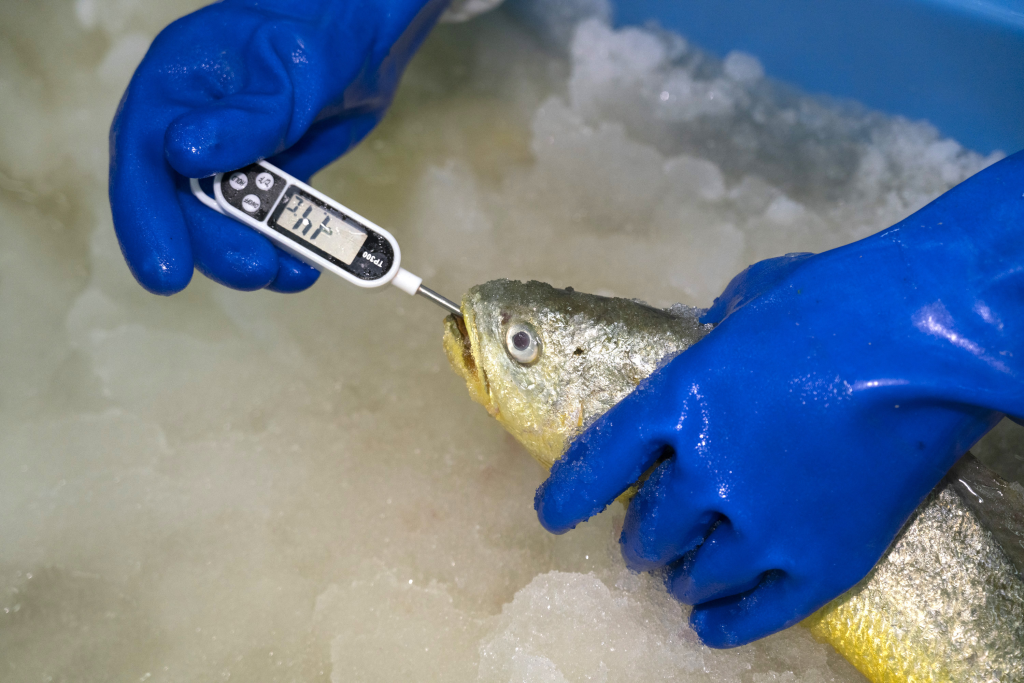
The “Guoxin No. 1” intelligent fishing vessel has made breakthroughs in deep-sea aquaculture technology, producing premium yellow croaker with firm flesh, almost identical to wild-caught fish, resolving the issue of “where to source good fish” and providing high-quality raw materials for retail. On the other hand, consumer demand for high-quality seafood continues to grow, with yellow croaker being a popular, widely recognized product.The core issue has shifted from “can we produce it?” to “how can we deliver it efficiently?” Elephant Supermarket’s collaboration with Guoxin No. 1 aims not only to deliver a good product, but also to explore how the Retail 3.0 concept of “product sovereignty” can solve long-standing problems. The company is pioneering a new model for delivering a sensitive-to-freshness deep-sea fish to inland tables.The challenges are immense: standardizing non-standard products, preserving freshness over long distances, and ensuring fast delivery to consumers. To address these, Elephant Supermarket has focused on several key initiatives:Quality Control Upfront – The supermarket has moved quality management from the warehouse to the production source, creating a new “three tests, four checks” process for monitoring the fish’s temperature at each stage of processing. This ensures that fish are consistently stored and handled to maintain quality. For example, when suppliers initially used ice sheets for cooling, they were required to install professional refrigeration equipment.
This pressure led to a comprehensive upgrade of the entire supply chain.Packaging Upgrade – Elephant Supermarket adopted advanced modified atmosphere packaging (MAP) technology, which reduces microbial activity and slows oxidation, extending the shelf life of the fish without additives. Transparent packaging also allows consumers to visually verify the product’s quality.”Mobile Refrigerators” for Delivery – With a fully integrated cold chain logistics system and extensive network of front-end warehouses, the supermarket ensures that the fish can be delivered fresh within 36 hours, with final delivery taking as little as 30 minutes. This is achieved not by relying on manual effort, but through a fully digitized supply chain.These efforts mark a shift in the retailer’s role from a passive product selector to an active partner in co-creating quality and setting standards. Through deep involvement in production, packaging, and logistics, Elephant Supermarket is redefining the standards for fresh seafood delivery.This journey of the yellow croaker reflects a significant transformation in the retail industry. It shows that by improving quality control, applying technology, and leveraging digital supply chain collaboration, instant retail platforms can bridge the traditional gap, delivering high-quality products to consumers. This isn’t just about supply chain capability; it’s a snapshot of the retail industry’s return to its commercial roots and the development of core product strength. It also provides a practical example for China’s consumer market to upgrade its quality standards.