The Bigger the Commercial Volume, the Greater the Danger? How Can Large Malls Innovate and Turn Their Disadvantages into Advantages?
“Is Bigger Commercial Volume More Dangerous? How Can Large Malls Innovate and Turn Challenges into Opportunities?”In recent years, the commercial model built on scale expansion and physical aggregation is facing unprecedented challenges. Many large shopping malls are experiencing difficulties in tenant acquisition and are struggling with low foot traffic. The era when “big can create miracles” in commercial development is over. Large-scale commercial projects no longer automatically equate to competitiveness. Instead, in the new consumer landscape, their structural disadvantages and heavy operational burdens have become more apparent. What’s even more worrying is that some developers, who were early pioneers of success, continue to rely on a “bigger is better” approach, investing with a scale-centric mindset, inadvertently setting themselves up for significant risks.Why Has the Era of “Big Creates Miracles” Ended?The commercial logic behind “big creates miracles” is rooted in specific historical conditions and stages of consumer demand. This logic was based on certain premises: urban expansion driving population concentration, offline shopping still being the mainstream, consumers’ strong need for “one-stop services,” and the relative scarcity of commercial supply. But today, the foundations supporting this logic are crumbling. Shopping functions have been largely absorbed by online platforms, and the “product advantage” of large-scale commercial centers no longer holds.
E-commerce and live-streaming have shifted the transactional environment for standardized products online. Consumers no longer need to visit a shopping mall just to buy a single item like clothes or shoes. Shopping is no longer a “destination activity” but rather a “side activity.”In this context, the “wide variety of products” advantage that large malls once relied on is being seriously weakened. In the past, a shopping center with 300 brands could attract a lot of customers. Today, consumers are more concerned with questions like, “Does this place offer the experience I want? Is there a compelling reason for me to come here?” When “products” are no longer the core competitive advantage, the “content density” of large-scale commercial spaces may instead become a burden—leading to insufficient attraction, rising vacancy rates, and high operational costs.Consumers have become increasingly segmented, and large malls struggle to create individuality and a sense of belonging. Today’s consumers, especially those in the post-95 and Gen Z demographic, are no longer passive receivers of the “mass market.” They are niche, interest-driven, and seek personal recognition. They won’t visit a mall just because it’s large; they are more likely to visit because the space aligns with their culture, lifestyle, and emotional resonance. Large-scale malls, however, face an inherent disadvantage when it comes to creating this individuality.
To appeal to a broader audience, they often pursue “universality” in their brand mix, which leads to a result where they do “everything but nothing deeply,” ultimately presenting a “standardized, characterless” space. As one young consumer shared during a research study: “When I walk into many big malls, the brands feel the same, the spaces look alike, and I can’t even tell whether I’m in Beijing, Chengdu, or Shanghai.”In today’s world of scarce attention, the “lack of distinction” in large malls has become their biggest weakness.The Rise of Community and Regional Commercial Centers Diminishes the Need for Distant Consumption.In the past, people were willing to drive an hour to visit a large mall because there were few alternatives in the surrounding area. Today, with urban renewal and the booming development of community-based commerce, “proximity shopping” has become the mainstream. Whether it’s a community mall, street commercial area, or transformed neighborhood center, these spaces meet residents’ daily needs with shorter distances, more precise offerings, and a friendlier atmosphere. In this “capillary” commercial network, the “radiating power” of large malls has been severely diluted. Consumers no longer need to “travel long distances” for a shopping trip; they now prefer the “short, frequent, and fast” satisfaction of nearby offerings. The “scale advantage” of large malls is losing its persuasive power in the face of “convenience.”The “Box-Shaped” Mall Lacks Depth in Experience Building and Can’t Support New Consumer Scenarios.The vast majority of large malls, constrained by land usage ratios and development efficiency, end up as “closed boxes.”
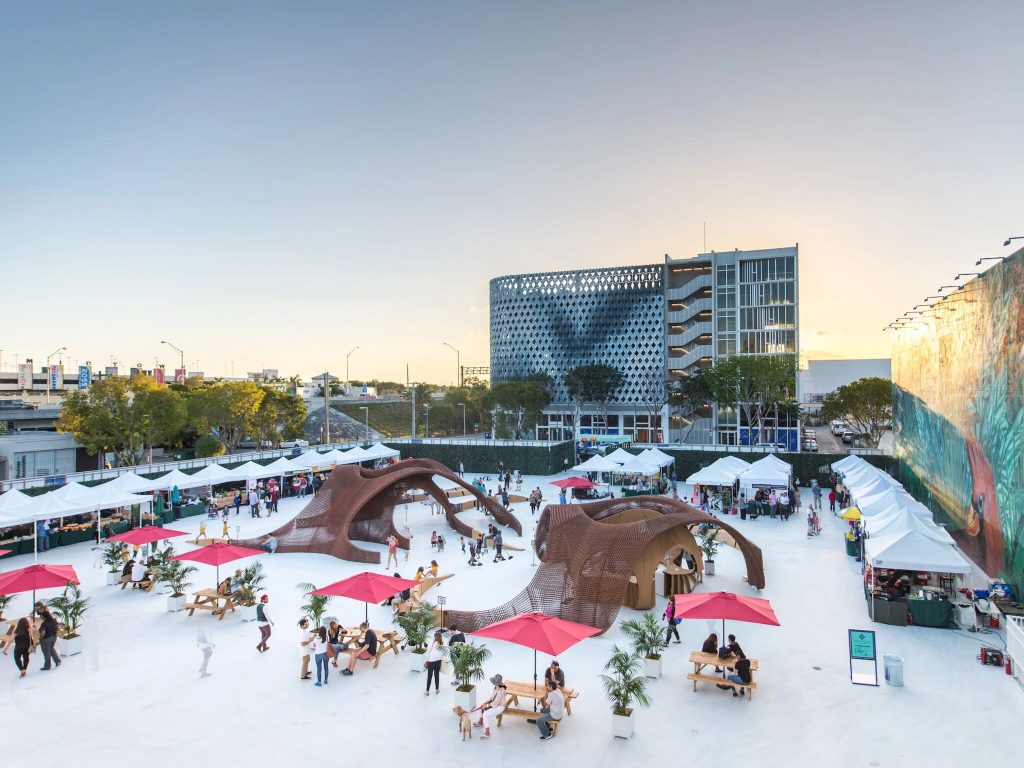
These malls lack a connection with the urban fabric, natural light and ventilation, and any rhythm of pedestrian movement. Most importantly, they lack opportunities for interaction with urban life. Today’s consumers, especially Gen Z, seek “immersive,” “scenic,” and “interactive” shopping experiences.They want to “stroll” in a space, not just “shop.” They expect spaces to provide emotional, social, and cultural value. But “boxes” have inherent limitations when it comes to creating these experiences. Most box-shaped malls operate like a closed machine—swallowing people at the entrance and spitting them out at the exit. In such spaces, consumers often feel fatigue, a sense of duty, and even the oppressive feeling of being “consumed.”The Economic “Disadvantages of Scale” Become More Pronounced.As consumers increasingly prioritize convenience, the “economic disadvantages of scale” in large malls are becoming more pronounced. A 200,000 square meter mall means consumers spend more time finding parking spaces, crossing atriums, and locating their desired stores. The common experience is one of being “tired from shopping,” while “shopping pleasure” becomes rare. In contrast, a 20,000 square meter neighborhood mall or a “small yet beautiful” community-centered project can offer a more relaxed and natural shopping experience, with people entering and exiting freely, and even generating consumption just by “passing through.”
Consumer behavior is increasingly polarized—on one side, there’s a demand for extreme convenience, and on the other, a demand for deep experiences. Traditional malls, which relied solely on scale and functional stacking, now fall into the blurry zone between these two extremes, losing much of their original appeal.Reconstructing Commercial Space and Operations.Based on the research and practice of RET, we believe that the future unique value of offline commerce must shift from simply “selling goods” to “managing relationships between people, brands, and cities.” We have identified three practical directions for action:Space as Service.Space should be seen as a continuous service carrier, not just a one-time rental container. Every space unit should correspond to a clear demographic motivation and a repeatable usage scenario, rather than just being “pretty.”Publicity as an Entrance.In the context of “weakened shopping and enhanced leisure,” public spaces become the strongest consumption entry point. Public spaces should not be empty gaps but places that can be used, such as seating areas, play zones, social gathering spots, and venues for performances or exercise.Community as Flow.From “borrowing platform traffic” to “self-building community traffic,” long-term communities based on lifestyles such as family, hobbies, camping, cycling, pets, and urban running should be established. This will help create a synergy between content supply and consumption scenarios, building long-term consumer loyalty.