How a Chinese Tech Innovation Company Became a Global Leader in Just Eight Years
In November 2017, Elon Musk, CEO of Tesla, Inc., unveiled two prototype Tesla Semi trucks to global users at Tesla’s design studio in California, USA. Musk claimed that the Semi would feature a 500-mile (approximately 800 km) range and be equipped with Tesla’s much-lauded Autopilot self-driving system.Almost simultaneously, on the other side of the world in Changsha, Hunan Province, China, Dr. Wei Ma, who had previously worked at global semiconductor giant Texas Instruments, reached out to Professor Ze Xiang Li, a connection he had made through work. As a professor in the Department of Electronic and Computer Engineering at the Hong Kong University of Science and Technology, Professor Li not only had a profound academic background but also an exceptionally keen investment vision—having guided his student Wang Tao in founding DJI, the global leader in drones.“We clicked immediately,” Wei Ma told Fortune China. “In December 2017, we decided to establish HIDI Intelligent Driving in Changsha.”Eight years is neither too short nor too long. At the time of the Tesla Semi launch, Musk likely never imagined that the vehicle would face historical black swan events such as the COVID-19 pandemic, delivering its first unit to PepsiCo only in 2022 and still struggling to reach full production today. Meanwhile, HIDI, a company Musk had never heard of, born across the ocean, leveraged China’s advanced infrastructure and abundant talent pool to become a top-tier player in the commercial vehicle autonomous driving sector within just eight years.As the saying goes, “even a needle can pierce the sky.”
Since Japanese scientist Kunihiko Fukushima proposed the cognitive machine theory in 1975, research in intelligent driving has increasingly focused on machine vision. For decades, universities, militaries, and tech giants alike have been striving to master autonomous driving. In 2014, Tesla launched the world’s first commercial autonomous driving system, Autopilot Hardware 1.0, to its users, marking the beginning of an explosive technological era for intelligent driving.By the end of 2017, HIDI faced not a tranquil blue ocean of opportunities but a highly competitive arena where scholars, governments, enterprises, and financial giants alike sought to capitalize on the market. Wei Ma’s first and most urgent challenge was survival. Vehicles and roads are interdependent; intelligent infrastructure could address the last 1% of autonomous driving challenges, such as “ghosting” intersections and beyond-line-of-sight perception. HIDI chose vehicle-road collaboration as its first breakthrough.Silicon Valley venture capitalist Paul Graham once noted that 95% of successful entrepreneurs find opportunities while solving problems. “We quickly entered this field, generating 20 million RMB in revenue in our first year,” Wei Ma recalled, “but more importantly, we gained early access to numerous intelligent connected vehicle scenarios, uncovering both problems and opportunities.”
However, vehicle-road collaboration is a policy-driven industry, dependent on government guidance and investment, and the outbreak of COVID-19 made large-scale deployment difficult. As Wei Ma explained, vehicle-road collaboration is a key support for autonomous driving, and V2X technology forms its foundation—the low-latency communication between vehicles, and between vehicles and roads, is critical. The pandemic slowed the construction of intelligent connected infrastructure, directly affecting the effectiveness of vehicle-road collaboration.“If every vehicle isn’t equipped, full connectivity cannot be achieved, reducing the effectiveness of collaboration. And if collaboration is weak, we cannot convince operators to equip every vehicle,” Wei Ma said. HIDI focused on full deployment of C-V2X in targeted subsystems to demonstrate tangible benefits. For example, in urban public transit, HIDI leveraged V2X’s low-latency communication to allow buses to actively request priority passage at traffic lights—a system called proactive bus prioritization. This solution significantly improved punctuality and efficiency, winning the 2021 World Smart City Mobility Award.Meanwhile, HIDI also entered fully autonomous operations in closed scenarios, such as mines and industrial parks, where the need for autonomous driving and vehicle-road collaboration is urgent. This strategic move became HIDI’s critical “turning point” for survival.“I discussed it many times with Professor Li, and we ultimately decided to start with commercial vehicles,” Wei Ma told Fortune China. “
While the number of commercial vehicles is smaller than private cars, it still reaches tens of millions. More importantly, commercial vehicles can operate up to twenty hours a day, compared to one or two hours for private cars. When you multiply by total operational hours, the market potential is significant.”Unlike passenger cars, commercial vehicles can be divided into nearly 300 categories based on use and scenario. Choosing the right niche was HIDI’s second major challenge. Wei Ma and his team ultimately selected the heavy-duty mining truck segment.“We observed the April 22, 2019 jade mine collapse in Kachin State, Myanmar, which claimed over 50 lives, and the 2022 open-pit coal mine landslide in Alxa, Inner Mongolia, which killed 53. Safety is the greatest demand in mining operations. Coupled with harsh conditions and remote locations making drivers hard to recruit, autonomous driving could deliver real value. So we decisively chose autonomous mining trucks,” Wei Ma explained.In hindsight, HIDI’s foresight was remarkable. In April 2024, China’s National Mine Safety Administration issued guidance promoting smart mine construction and mandating automation, validating HIDI’s strategic choice. Although there was high uncertainty during those early days of R&D, the policy and market demand indicated a significant opportunity.Wei Ma eagerly shared HIDI’s transformative journey. “In 2019, we launched our first mining truck project in Chifeng.
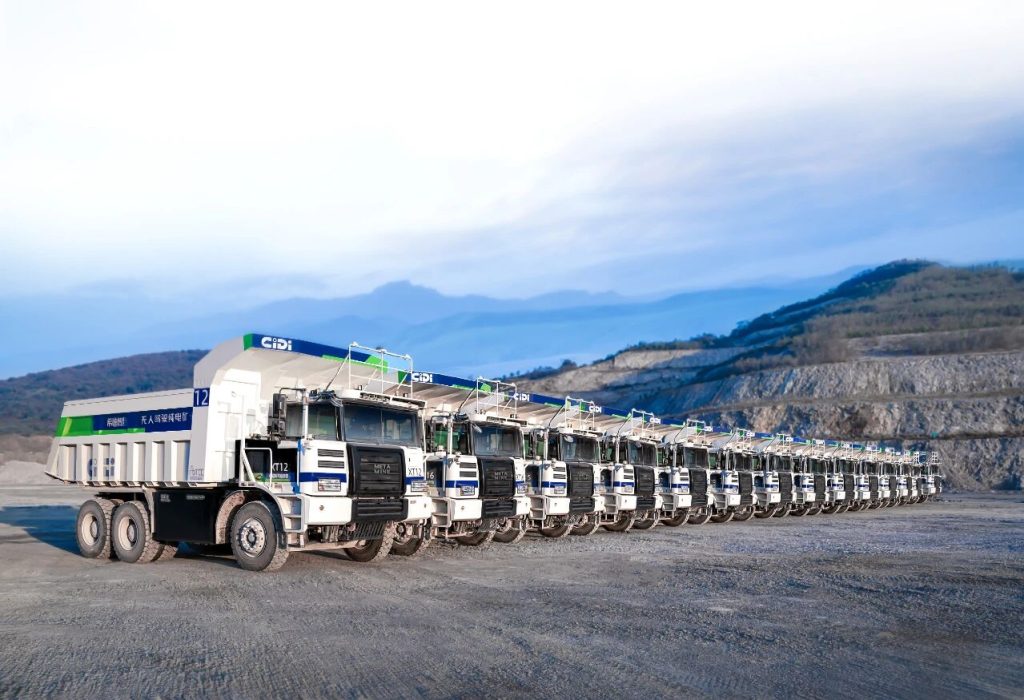
The scale was small, but it was a solid start. A year later, we persuaded a major client in Jiangsu to provide two 15-year-old trucks for proof-of-concept autonomous retrofitting.” HIDI’s technical team worked onsite for two full years. By July 2022, the effort paid off: both trucks were fully upgraded, meeting all technical benchmarks. Impressed by HIDI’s professionalism, the client invested in 14 autonomous trucks.In November 2022, HIDI’s fully electric autonomous mining truck fleet began “7×16-hour” operations in the mine, marking the industry’s first fully autonomous mining operation. Authoritative calculations showed the autonomous trucks operated at 1.04 times the efficiency of human-driven trucks, with 88% lower energy costs. “To me, this is HIDI’s landmark project in autonomous mining trucks,” Wei Ma said. “It proved the sector’s immense potential and demonstrated that we could compete at the global top tier.” The Jiangsu project brought substantial visibility and reputation, and Taihe Cement subsequently collaborated with HIDI on two additional mines.As the pinnacle of HIDI’s technology system, autonomous mining trucks helped overcome previously insurmountable market barriers. In 2024, HIDI deployed the world’s largest hybrid mining operation for China Energy Group’s open-pit coal mine with an annual production of 16 million tons, integrating 56 autonomous trucks with about 500 human-driven vehicles. “Even a needle can pierce the sky,” Wei Ma remarked.
Technology is the only moat for hard-tech companies. In 2006, 26-year-old Wang Tao enrolled as a graduate student at HKUST, where he first met his mentor Professor Li Ze Xiang. Encouraged by his mentor, Wang founded DJI, one of China’s top hard-tech companies. Clearly, Professor Li’s respect for both technology and talent influenced HIDI’s philosophy.“Changsha has three top-tier universities; nationwide, it ranks just after Beijing and Shanghai, on par with Xi’an,” Wei Ma noted. “We chose Changsha to attract and retain talent. The cost of living here is lowest among the top cities, allowing low-cost entrepreneurship and high-quality living. This relaxed environment helps our young technical talent fully realize their potential.”HIDI’s talent strategy proved successful. In a 2024 interview, Wei Ma revealed that HIDI had built a team of several hundred employees, with over 50% in R&D, and R&D expenses accounting for more than 40% of operating costs. This is a substantial investment. In Fortune’s nearly 100-year history, many hard-tech companies have been burdened by R&D costs. HIDI, however, managed its investment efficiently.“We have our methodology,” Wei Ma said. “Specifically, our R&D follows a four-stage closed-loop approach: the first loop uses 10% of resources, the second 20%, the third 30%, and the fourth 40%. At each stage, if we cannot find paying customers or the prototype fails to attract interest, we reassess demand and stop loss promptly.”
This iterative, small-batch approach prevents small R&D teams from being trapped by sunk costs. Once the focus is validated, other teams can support rather than interfere. HIDI does not simply throw all R&D staff at a single project. Wei Ma explained that good collaboration requires proper division of labor: “Our management has deep technical expertise, so we decouple R&D tasks by product architecture, team capabilities, and business model, creating modular, task-oriented teams. Efficiency comes from smart division, not overworking employees.”For the Taihe Cement project in Jiangsu, HIDI divided headquarters R&D into groups responsible for battery systems, sensors, radar, communications, perception, planning, control, and scheduling, further split into algorithm, engineering, and deployment teams. HIDI also deployed nearly 20 engineers onsite at the mines, living in dorms and working at the operation site to ensure precise alignment of technology and real-world scenarios.This methodology built HIDI’s deep technological moat. Within just a few years, the company developed three core product lines: autonomous driving, V2X, and high-performance perception, providing cutting-edge proprietary solutions globally. “Our core competitiveness lies in technological advancement and completeness,” Wei Ma said proudly. “Our first mine has operated for three years with minimal engineer intervention; after the first-year warranty ended, the team left, yet the project continues to operate more efficiently than human drivers.”