Shenzhen Houhai: How Did It Transform from a Place Name into a ‘City Brand’?
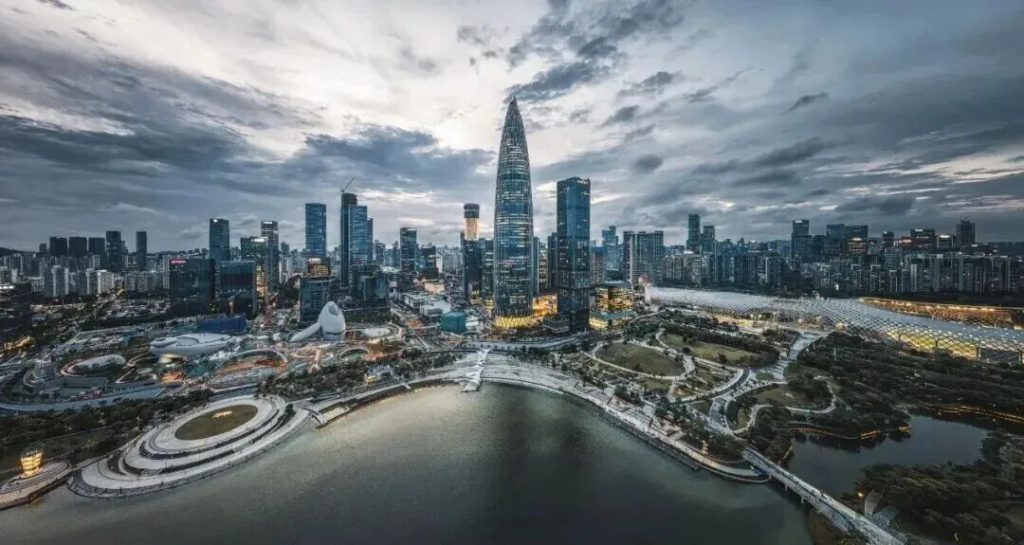
Shenzhen Houhai: From a Place Name to a ‘City Brand’.In recent times, Houhai in Shenzhen has become an unavoidable destination for visitors. With the opening of Shenzhen Bay Avenue, the launch of Shenzhen Bay MixC Phase II, and the soft opening of Shenzhen Bay Cultural Plaza, every piece of “city news” here is enough to capture attention.Walking along the aerial corridors feels like unrolling a long scroll of Houhai, a “magic door” that can switch scenes at any moment. In a city where mountains meet the sea, Shenzhen has once again unlocked its urban potential.From Zero to One: Public Infrastructure as the Initial Driver.Looking back, the birth of Houhai actually began with a large-scale land reclamation movement. At the end of the 20th century, Shenzhen started extensive land reclamation projects to meet urban development needs.In 2007, the Shenzhen Bay Bridge officially opened, connecting Shenzhen and Hong Kong by sea. “Shenzhen Bay” quickly became a geographical landmark linking the two cities.The subsequent transformation, from a muddy tidal flat to a superheadquarters business district, can be seen as a gradually completed “super plan”.The first step was prioritizing public construction to drive urban development with major events. In 2008, China Resources Land was tasked with building the Shenzhen Bay Sports Center (“Spring Cocoon”) in just 22 months, serving as the opening venue of the 26th Summer Universiade, instantly drawing the city’s attention.
The rise of the headquarters district began from this pivotal point.In 2018, Shenzhen Bay MixC and the landmark “Spring Bamboo Shoot” China Resources Tower opened, marking the emergence of Shenzhen Bay as a high-profile urban hub.In 2017, Shenzhen Talent Park, built and operated by China Resources Land, opened.Within just ten years, Shenzhen Bay completed its functional cycle, evolving naturally from industry aggregation to crowd attraction as public infrastructure matured.Even today, China Resources Land continues to expand public and commercial facilities in Houhai, amplifying Shenzhen Bay’s influence.September 2025: Phase II of Shenzhen Bay MixC officially opened.November 2025: Shenzhen Bay Cultural Plaza, built and operated by China Resources Land, debuted in the CBD with its seaside rock formations and unique landscape architecture, connected via aerial corridors to Shenzhen Bay MixC.Under the 400-meter “Spring Bamboo Shoot” stands a cultural landmark representing a “mountain-water city”, embodying urban idealism rarely realized elsewhere. At this point, Houhai’s comprehensive functional plan is essentially complete.District Integration: From Functional Zoning to “Harmony in Diversity”The success of the “Houhai Model” is not just measured by how many landmark buildings were constructed or how many corporate giants were attracted, but by its systematic planning.This system encompasses:Integrated design connecting all districts,Traffic flow predictions, and.Advanced planning for multifunctional urban spaces.Houhai’s systematic design is first evident in its meticulous master planning.
Planners creatively adopted a “small blocks, dense street grid, zero setbacks” approach, dividing the district into 36 development plots, each averaging 2–3 hectares.Unlike traditional large-scale new towns, Houhai’s road network reaches a density of 12 km per km², far exceeding national standards. This high-density street network alleviates traffic and creates vibrant street interfaces, infusing life into every corner.The recently opened Shenzhen Bay Avenue not only improves pedestrian traffic but also functions as a linear city connector, linking multiple public nodes for seamless flow, conversion, and redistribution.This 3D network of ground, sky, and underground connections transforms scattered commercial districts, parks, and cultural facilities from “individual points” into a cohesive network, bridging the gap between urban life and nature.Some even say, “No two plots in Houhai are alike.” Indeed, design guidelines are tailored, yet every plot is interconnected and follows logical, consistent rules to maintain “harmony in diversity.”Comparing 2003’s Nanshan zoning plan with today, Houhai’s central district has grown from 20 plots to 109, a fivefold increase.China Resources Land’s integrated planning also blends commerce, culture, ecology, and business functions efficiently:Shenzhen Bay MixC Phase II: Nearly 300 new brands combine with Phase I to form a 500+ brand matrix, totaling 250,000 m² of commercial space, creating a dual-core “commerce + culture” super hub.Shenzhen Bay Cultural Plaza: 180,000 m² of total building area, with 9 major exhibition halls and 50,000 m² of display space, featuring iconic stone cluster landscapes connecting the city and sea, exemplifying the integration of urban design, public space, and commercial functionality.
Houhai aims to be an ecosystem connecting high-end lifestyles with cultural and artistic experiences, balancing commerce with culture nearly 1:1, encouraging longer stays and higher consumption conversion.Intelligent, Human-Centered City Operations.No matter how advanced the design, static infrastructure alone cannot guarantee urban success. Long-term operations ultimately determine a district’s lifecycle.Since 2005, China Resources Land has been involved in top-level planning and development of Houhai, gradually evolving from builder to operator, managing the district’s full urban lifecycle.Over 3.5 km² of public space in Houhai Central District, China Resources Land has implemented “city brand + smart operations + industrial hubs + cultural & sports events + integrated management” services.Smart Operations:By 2022, after winning the Houhai Smart City Operations Project, China Resources Land helped establish the Houhai Smart Operations Center, digitizing the district into a digital twin for daily operations and emergency coordination.The 3D modeling allows data-driven decisions, precise alerts, and optimized resource allocation, enhancing urban governance efficiency.Content Operations:Continuous property value growth is maintained through dynamic content and events, such as Houhai Carnival and Shenzhen Bay Coffee Culture Week, making Houhai a vibrant, human-centered district rather than a cold commercial zone.
Brand Operations:On December 2, 2024, Houhai unveiled its new brand identity, expressing “people, city, and nature” balance, projecting cultural confidence and innovation within the global bay area.Integrated digital platforms, such as the “Look at Houhai” mini-program, connect businesses and residents to real-time event updates and urban navigation.At this stage, Houhai has transformed from a mere place name into a symbol of advanced city operations. Its success lies in a market-oriented urban operation model, where government, enterprise, and citizens cooperate under a co-construction, co-governance mechanism.Enterprises leverage market efficiency to coordinate multiple government demands, shifting urban management from end-point problem-solving to source governance.Government can focus on development goals and top-level design, while enterprises execute and optimize operations, ensuring planning consistency and professional operation.This model fully integrates residential, commercial, industrial, cultural, ecological, and public service elements, demonstrating how professional operators can complement government governance to create urban spaces with both commercial and public value.When large-scale urban construction becomes hard to replicate, long-term operations become the key to attracting and retaining residents. The city’s charm does not rely on tall buildings or grand narratives, but on public squares, parks, and civic activities, reflecting the true spirit of the city — built on the long-term vision and execution capability of a city operator.Houhai’s 3.5 km² experiment signals the future direction of urban operation in China.