A ‘Hard Discount’ Storm Sweeps the Retail Industry: What Is the Core of the Competition?
Retail Industry Faces a “Hard Discount” Storm: What Is the Core of Competition?In the second half of 2025, the retail industry has turned its focus on the offline “hard discount” sector. After Alibaba’s Hema NB rebranded to “Super Box NB,” it opened 17 new stores in a single day. Meituan’s “Happy Monkey” flagship store in Hangzhou quickly gained attention upon opening, while Aldi set a sales record in Suzhou and Wuxi, expanding beyond Shanghai. Meanwhile, JD.com opened the country’s first 5,000-square-meter discount supermarket in Zhuozhou, Hebei, which attracted nearly 60,000 visitors on opening day. In Beijing, Wumart opened six “Wumart Super Value” discount stores, and Zhongbai Supermarket announced the launch of 51 hard discount stores across the country on September 26, underscoring its strategic focus on the discount retail model.Hard discount has now become the new engine of the retail market and is expected to be “the next big trend” in the context of rising consumer rationality. So, what is the core of the competition behind the rush by major Internet giants and traditional retailers to bet on hard discount supermarkets?Major Players Join the Race to Enter the Hard Discount Sector.The big players are entering the hard discount market in full force, with Alibaba, JD.com, and Meituan—three Internet giants—rarely collaborating and pushing the model into the spotlight.
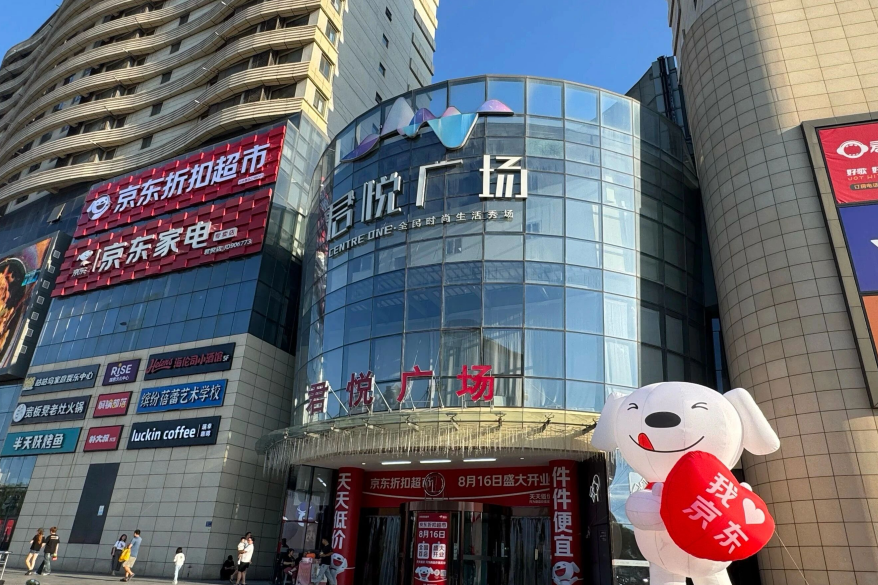
Unlike the “soft discount” model that deals with clearance or near-expiry products, hard discount operates on optimizing the supply chain, reducing intermediaries, and lowering operational costs to offer sustainable low-price supplies that cater to consumers’ growing demand for “high cost-effectiveness.”Hema NB (now rebranded to “Super Box NB”) integrated neighborhood stores and outlets into a new model in 2023, officially rebranding in August 2025 to focus on the community market in the Yangtze River Delta. By the end of August, Super Box NB had nearly 300 stores across cities like Shanghai, Ningbo, Shaoxing, Nanjing, Suzhou, Hangzhou, and Nantong, all opened in a single day, with a store area ranging from 600 to 800 square meters and a product offering reduced to about 1,500 SKUs. Over 60% of the products were fresh food, with the store’s own brand “Hema NB Selection” accounting for 35%. Through close cooperation with quality suppliers, Super Box NB optimized its procurement process and lowered prices by 15%-20% compared to market products.JD.com took a completely different approach, with its large-scale stores. On August 16, JD opened a 5,000-square-meter discount supermarket in Zhuozhou, Hebei, which attracted nearly 60,000 visitors on the opening day. In Suqian, Jiangsu, four new stores were opened simultaneously on August 30, receiving over 300,000 visitors on the first day.
JD’s new stores feature a wide range of 5,000 SKUs, including everyday goods, fresh produce, fast-moving consumer goods, alcoholic beverages, and more. With direct sourcing from producers to reduce costs, the prices of these products are generally lower than the market’s regular price. Popular products included 9.9 yuan for 30 eggs, 100% fruit juices, and beers. In addition to offline stores, JD offers instant delivery services, with delivery as fast as 30 minutes through the JD app.Meituan’s “Happy Monkey” discount supermarket also made its debut on August 29, with its flagship store in Hangzhou. The stores range in size from 800 to 1,000 square meters, offering around 1,200 SKUs, 300 of which are their own brand. Meituan plans to open around 10 “Happy Monkey” stores this year and expand to 1,000 stores in the future, with a key focus on perfecting the business model. Meituan’s CEO Wang Xing has stated that China’s fresh food retail market still holds significant growth potential, especially in lower-tier markets where many consumers prefer offline shopping.Traditional Retailers Respond Rapidly to the Hard Discount Trend.Traditional retailers are also responding quickly to this trend. Wumart opened six “Wumart Super Value” discount stores in Beijing, transforming large supermarkets into discount outlets.
These stores focus on a curated selection of high-quality, cost-effective goods, with around 1,300 SKUs and 60% of products from their own brand. Zhongbai Group also opened its first discount store recently, with over 600 square meters of retail space and more than 2,000 SKUs covering fresh produce and other necessities. German discount giant Aldi is accelerating its expansion in China, with new stores opening in Wuxi and Suzhou, while reducing prices on over 50 daily essentials by up to 30%.Snack brands are also joining the wave of hard discount retailers. Starting in the second half of 2024, several regional snack chains have adopted the hard discount wholesale model, with brands like Wanchen Group introducing its “Laiyoupin Discount Supermarket” model.Why Are Retail Giants Focusing on Hard Discount Supermarkets?The logic behind these large players’ strategic focus on hard discount supermarkets can be attributed to three key factors.The Market Potential Is Huge.According to the “2025 China Retail Industry Outlook,” the hard discount market in China is expected to surpass 200 billion yuan by 2024. Despite its vast size, the market penetration of hard discount is still only 8%. A Bain & Company research report forecasts that the compound annual growth rate (CAGR) of hard discount retail will reach 5.6% over the next decade, outpacing hypermarkets and slightly surpassing convenience stores.
The Trend Toward Rational Consumption and Demand for Cost-Effectiveness.As Chinese consumers increasingly focus on “value for money,” with “quality-price ratio” becoming the core direction for upgrades, hard discount supermarkets offer “low prices without sacrificing quality.” This model resonates with the general public’s desire for high-cost performance, especially given the rising sensitivity to prices and the preference for real value over brand prestige. Through simplifying product offerings, focusing on own-brands, and restructuring the supply chain, hard discount supermarkets offer products that consumers believe are “truly worth the price.”Retail Ecosystems Require Multi-Model Synergies.For Internet giants, hard discount supermarkets offer an important way to acquire new users. With online traffic saturation and rising customer acquisition costs, community-based discount stores offer a new entry point to attract customers with low-price, high-frequency fresh products. Additionally, this model is vital for e-commerce platforms looking to secure an edge in instant retail, where offline stores double as a “front warehouse” for fast delivery, typically within 30 minutes for orders placed through mobile apps.The Core of Competition: Supply Chain, Own Brands, Cost Control, and Efficiency.The competition in the hard discount supermarket sector is not just about price; it is about the integrated competition of supply chain, own brands, cost control, digital operations, and differentiated services.Supply Chain as the Core Barrier.
Hard discount supermarkets usually control their SKUs between 500-2000 items, which allows for concentrated purchasing and stronger bargaining power with producers or factories. This, in turn, helps reduce unit procurement costs and improve operational efficiency.The Importance of Own Brands.Own brands offer higher profit margins and allow supermarkets to control every part of the supply chain, from sourcing to production and pricing. This not only allows for quick response to consumer demand but also strengthens consumer loyalty through differentiation.Cost Control.The gross profit margins for hard discount supermarkets are generally low—around 10%-15%—which is significantly lower than traditional retailers’ margins of 20%-25%. Yet, they achieve profitability by focusing on high turnover rates and reducing costs through efficient operations like bulk stocking and smart ordering systems.Differentiated Products and Services.As more players enter the market, the risk of homogeneous competition increases. To stand out, hard discount supermarkets innovate with new products and services, such as “single-serve fresh packaging” targeted at single consumers, or exclusive own-brand product lines.Conclusion.The rise of hard discount supermarkets represents a return to retail’s essence: providing consumers with true value for their money. The combination of efficient supply chains, refined operations, and online-offline synergy will be the key factors in winning the competition. As the retail industry undergoes transformation, hard discount supermarkets will likely be at the forefront of this new trend, catering to a growing demand for rational consumption and high-quality, affordable products.